
Your Ultimate Birdwatching Guide to Sayulita, Mexico
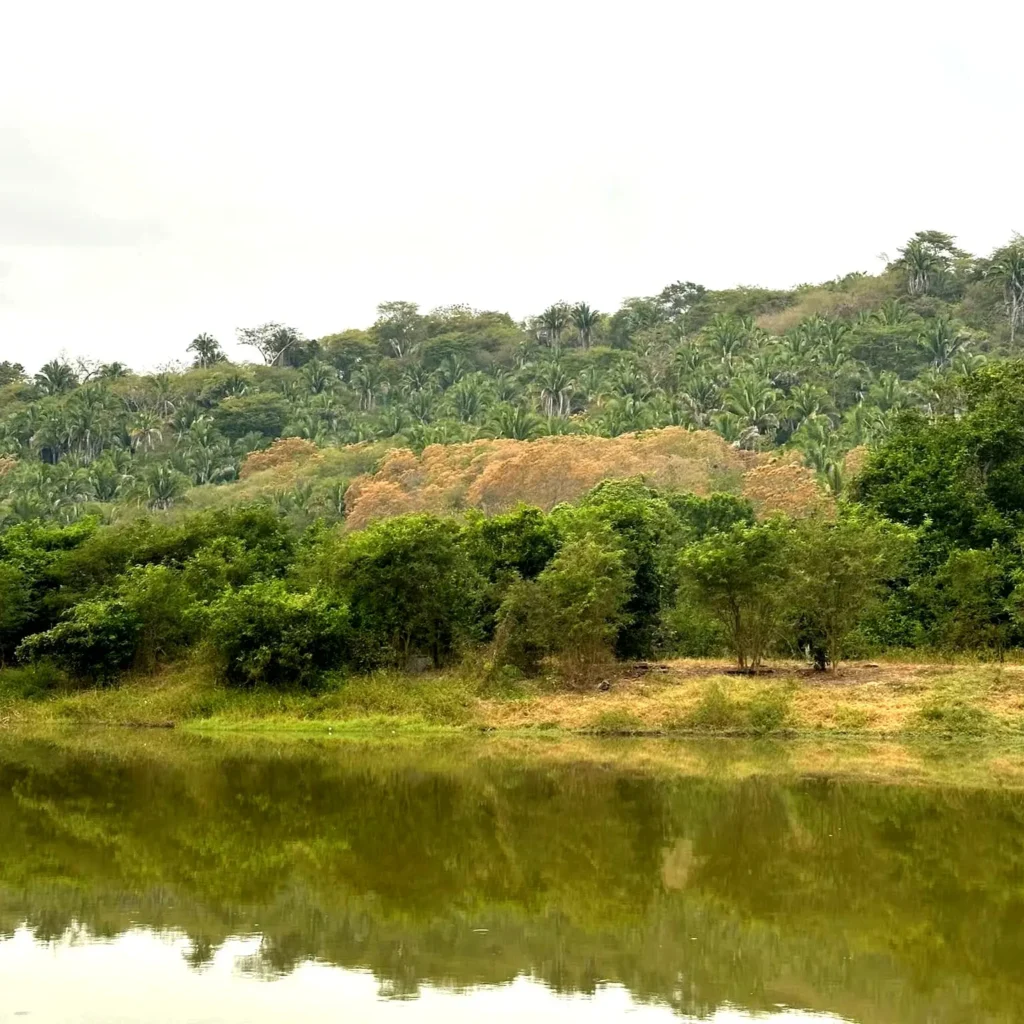
Sayulita, Mexico is an excellent birdwatching destination, with coastal, estuary, and tropical forest habitats within a compact, walkable area. Located in Nayarit, the region is home to more than 530 recorded bird species↗️, including year-round residents and seasonal migrants.
Birdwatching is rewarding throughout the year, but November through March offers the greatest variety. During these months, migratory songbirds, raptors, and shorebirds become more active across jungle canopies, river mouths, and coastal lagoons.
This guide features 39 bird species commonly seen in the region, organized by habitat to help visitors explore efficiently — whether you’re an experienced birder or simply curious about local wildlife.
Birdwatching is just one way to experience Sayulita’s remarkable biodiversity. The region’s coastal forests, estuaries, and Pacific waters also support dolphins, whales, sea turtles, and countless other native species.
New to Sayulita? Visit our Plan Your Trip to Sayulita Guide.
📑 Explore This Birdwatching Guide
🌴 Tropical & Jungle Birds: 🦅 American Kestrel · 🪶 Black Vultures · 🐝 Broad-billed Hummingbird · 🐓 Chachalaca · 🐦 Clay-colored Thrush · 🦃 Crested Guan · 🟡 Great Kiskadee · 🖤 Great-tailed Grackle · 🕊️ Inca Dove · 🦜 Keel-billed Toucan · 💜 Lilac-crowned Amazon · 🟢 Military Macaw · 🌙 Northern Potoo · 🦜 Orange-fronted Parakeet · 🔴 Rufous Hummingbird · 💙 San Blas Jay · 🟥 Scarlet Macaw · 🟠 Streak-backed Oriole · 💠 Turquoise-browed Motmot · ❤️ Vermilion Flycatcher · 🖤 White-throated Magpie-Jay · 🌼 Yellow-winged Cacique
🌊 Seabirds, Shorebirds & Waterfowl: 🦢 American White Pelican · 🪶 Bare-throated Tiger Heron · 🎣 Belted Kingfisher · 🦆 Black-bellied Whistling-Duck · 🌊 Brown Pelican · 🐦 Great Blue Heron · 🤍 Great Egret · 😂 Laughing Gull · 🪁 Magnificent Frigatebird · 🦆 Northern Pintail · 🦅 Osprey · 🥄Roseate Spoonbill · ❄ Snowy Egret
🧭 Seasonal & Migratory Highlights: 🌀 Broad-winged Hawk · ❤️ Northern Cardinal · 🎨 Painted Bunting · 🟥 Summer Tanager
❓ Frequently Asked Questions · 🎟 Birdwatching Tours · 🌿 Amari’s Tips for Birdwatching · 🔎 Explore More Sayulita Travel Questions · 🏨 Where to Stay · 📚 Source Information
🌴 Tropical Birds
Tropical birdlife thrives across forested hills, palm-lined streets, and jungle edges surrounding the village. Many species are visible year-round and frequently heard before they are seen, adding constant movement and sound to daily life.
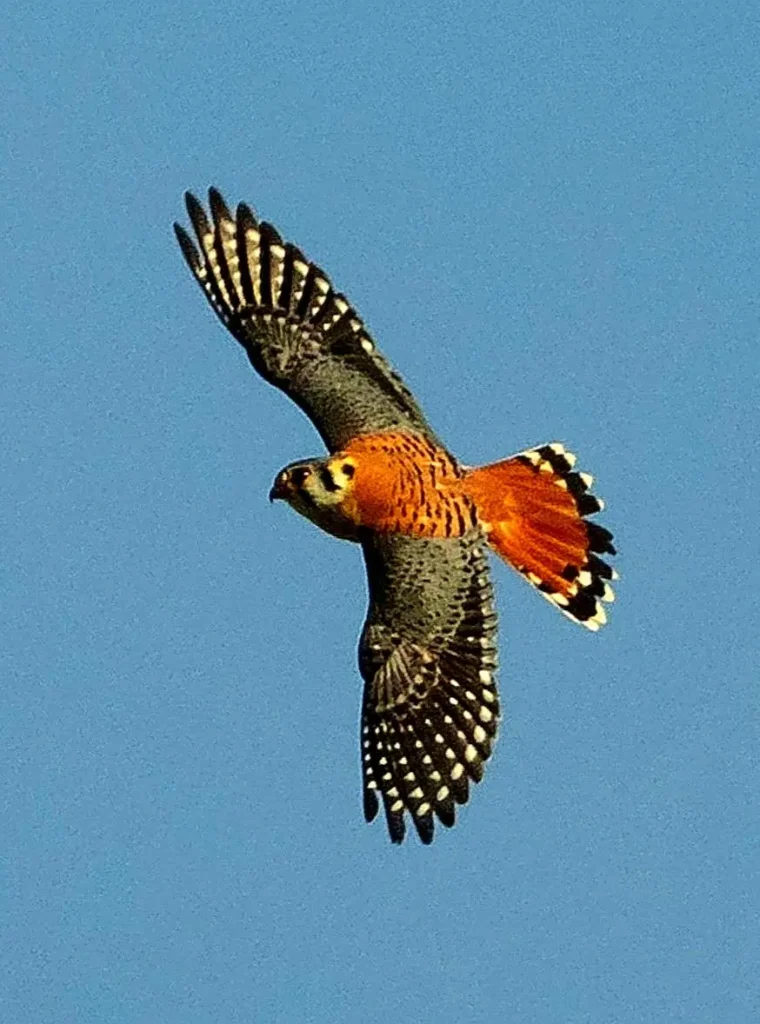
American Kestrels (Falco sparverius)
Known for their ability to hover motionless in midair, American Kestrels use an aerial maneuver called kiting while scanning the ground for prey. These small, long-tailed falcons are identifiable by their bold facial stripes and compact build.
They occur year-round in the region, near the southern edge of their range, and are frequently seen perched on wires or fence posts before dropping swiftly onto insects, small reptiles, or rodents.
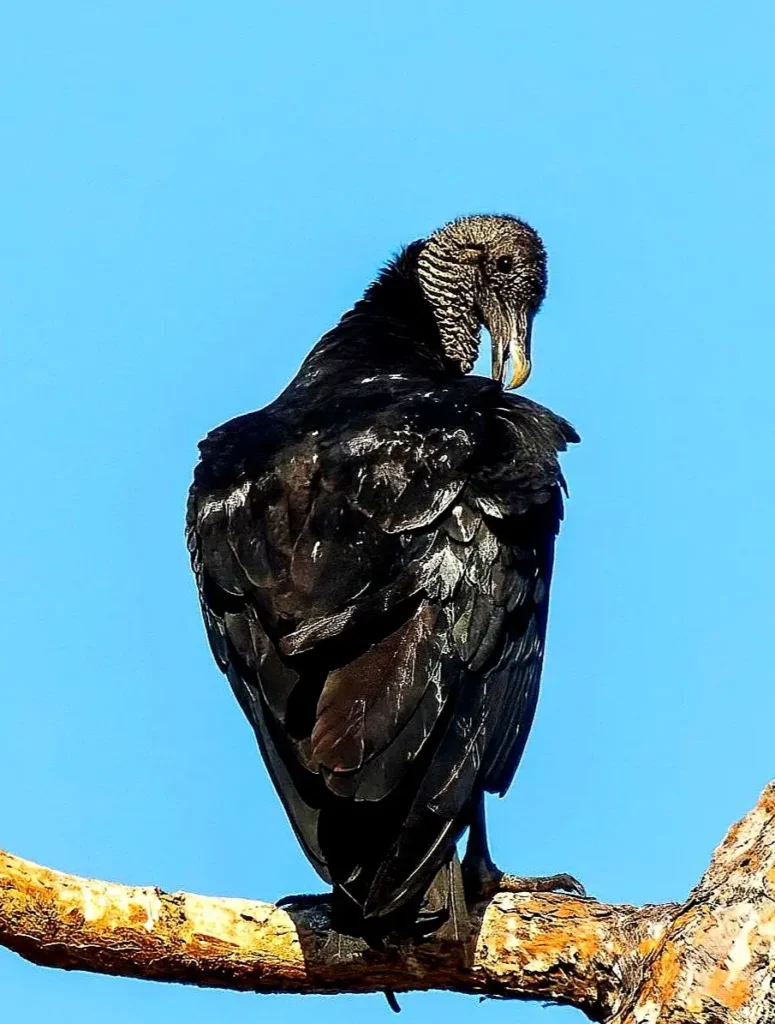
Black Vultures (Coragyps atratus)
Frequently seen soaring in wide circles above tropical lowlands, Black Vultures are an ever-present part of the region’s avian landscape. Unlike many raptors, they rely on keen eyesight and social behavior rather than smell to locate food.
Often gathering in groups, these scavengers play an essential ecological role by rapidly cleaning organic remains. When perched, their hunched posture, bare gray head, and broad wings give them a distinctive silhouette against the sky or forest edge.
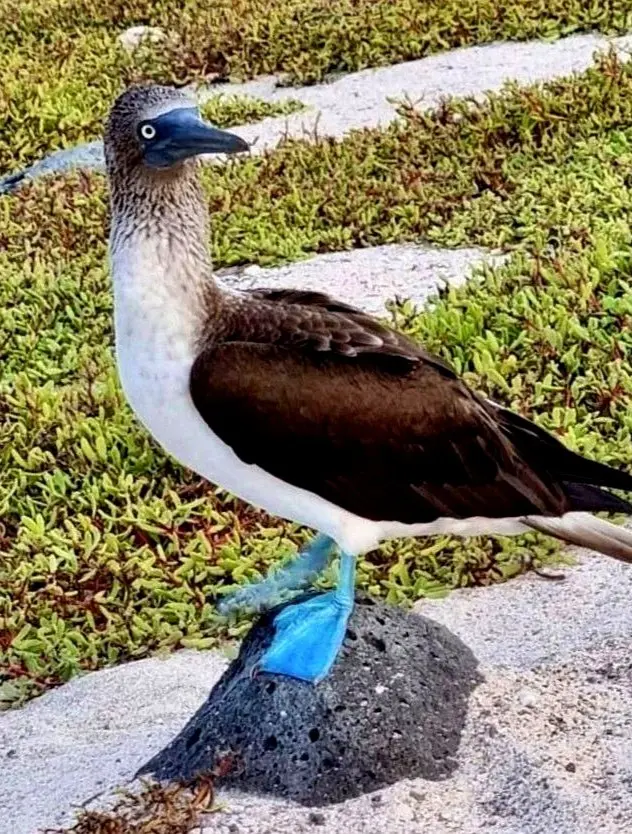
Blue-footed Boobies (Sula nebouxii)
Instantly recognizable by their vivid blue feet, Blue-footed Boobies are among the most iconic seabirds of Mexico’s Pacific coast. While sightings near Sayulita are occasional, these birds are closely associated with the nearby Marietas Islands, where they nest and feed.
Their brightly colored feet play a central role in courtship displays, signaling health and vitality to potential mates. For a deeper look at their behavior and habitat, see our dedicated guide to the Marietas Islands and Blue-footed Boobies .
Broad-billed Hummingbirds (Cynanthus latirostris)
Small and brilliantly colored, Broad-billed Hummingbirds are frequent visitors to flowering trees and gardens throughout the area. Males display vibrant green plumage, a shimmering blue throat, and a long red bill, while females appear more subdued.
During courtship, males hover directly in front of females, swinging rhythmically from side to side in a distinctive aerial display.

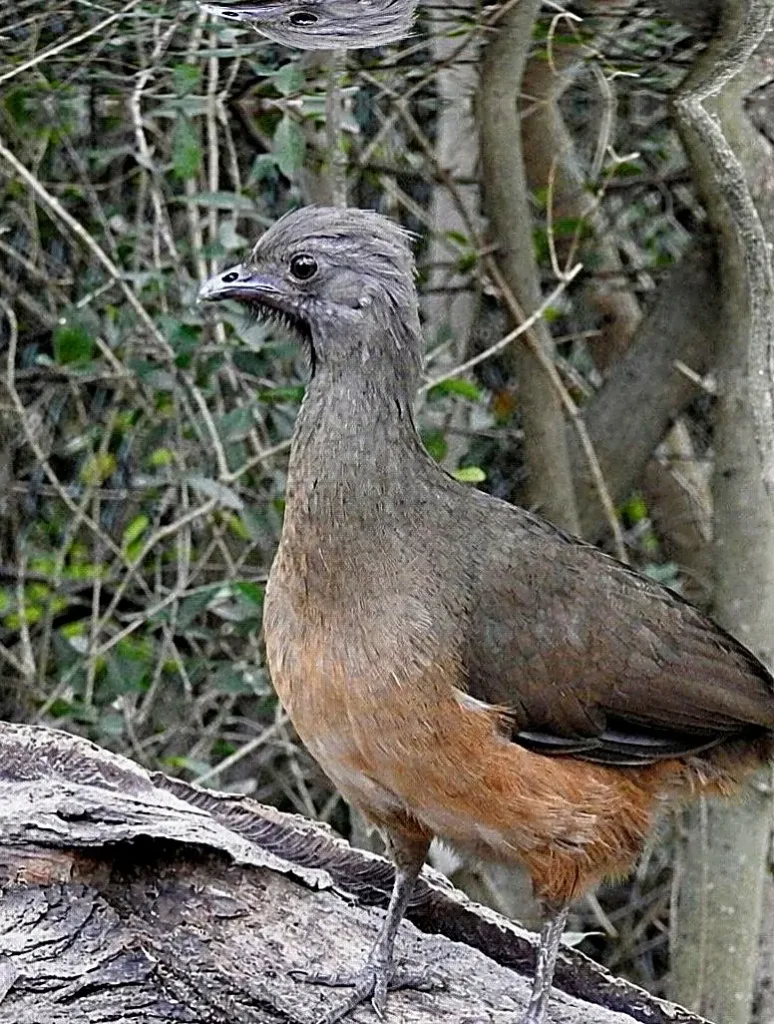
Chachalacas (Ortalis vetula)
Often heard before they are seen, Chachalacas move through the treetops in noisy, social groups. Their loud calls frequently echo through jungle edges and forested hills, especially in the early morning.
Resembling long-tailed tropical chickens, they are opportunistic feeders and can be surprisingly bold when food is abundant. Once located, their size and constant movement make them easy to track↗️.
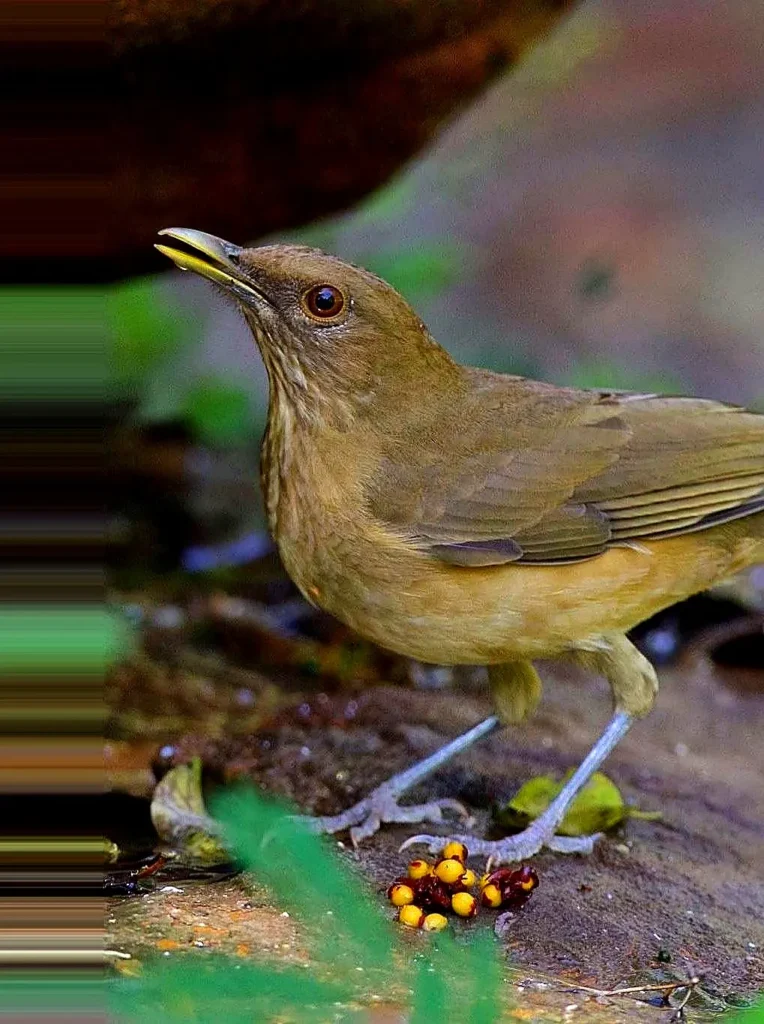
Clay-Colored Thrush (Turdus grayi)
Often encountered at ground level, Clay-colored Thrushes move deliberately through leaf litter in search of insects and fallen fruit. Their warm brown tones blend easily into the forest floor, making them more often heard than seen.
Known for their rich, flute-like songs, they are most vocal during early morning and after rainfall. As adaptable foragers, they thrive in forest edges, gardens, and lightly wooded areas throughout the tropical lowlands.
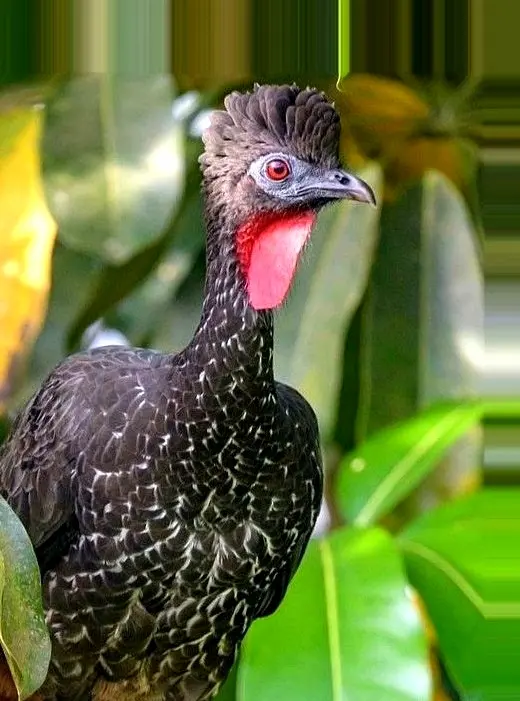
Crested Guans (Penelope purpurascens)
Large and turkey-like in appearance, Crested Guans are distinguished by a bushy crest and a bright red throat wattle. They are most often observed perched high in trees or gliding quietly through the forest canopy.
Primarily fruit-eaters, these birds play an important role in seed dispersal throughout the jungle. Due to historical hunting pressure, they tend to be cautious and quick to retreat when disturbed.
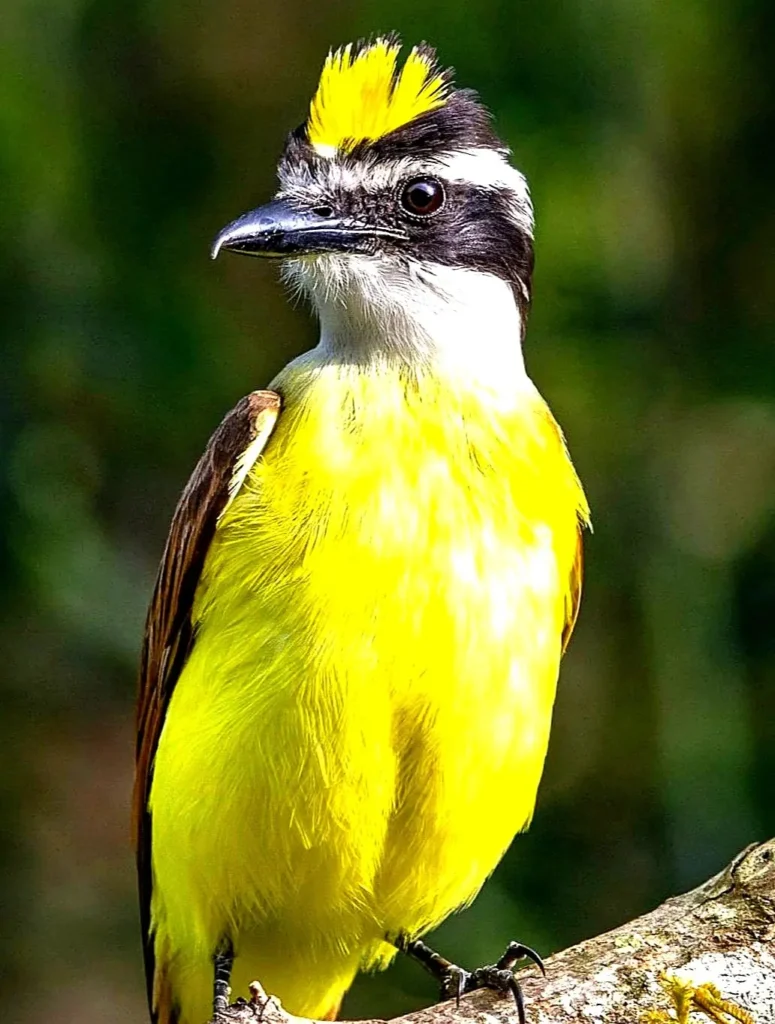
Great Kiskadees (Pitangus sulphuratus)
Loud, confident, and highly visible, Great Kiskadees announce their presence with a sharp “kis-ka-dee” call that carries across open areas and forest edges.
Exceptionally adaptable, they feed on insects, fruit, small reptiles, and even fish. Their comfort around people makes them one of the most frequently observed birds in town.
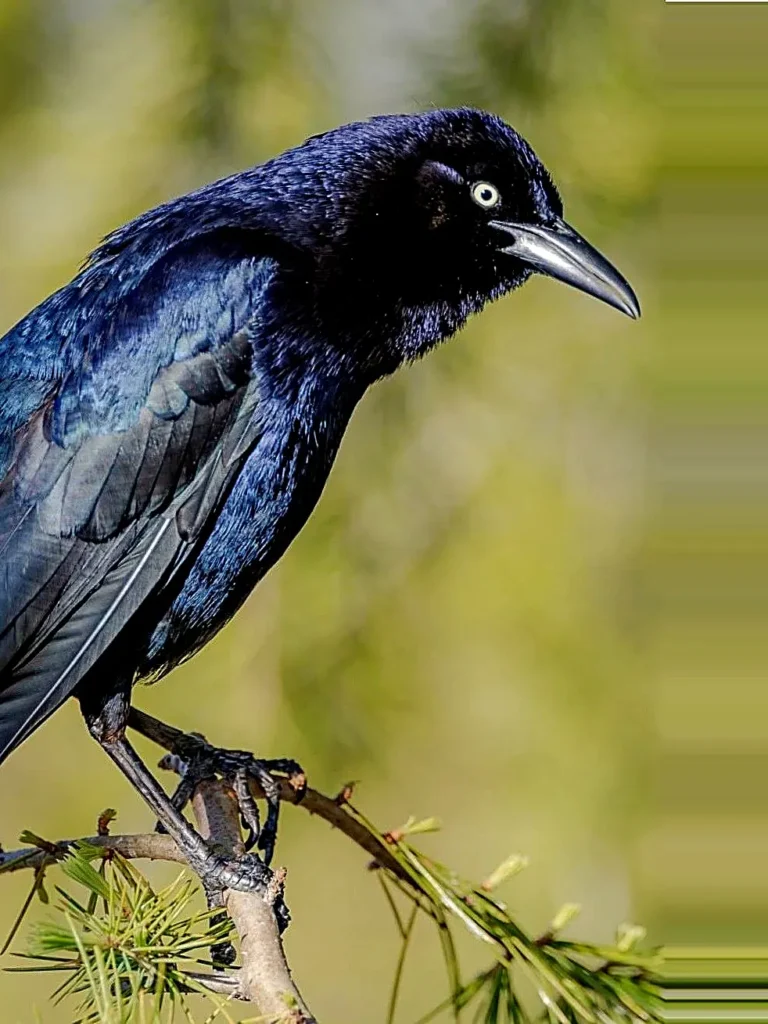
Great-tailed Grackles (Quiscalus mexicanus)
Bold, vocal, and highly adaptable, Great-tailed Grackles are a familiar sight across open woodland, village edges, and coastal lowlands. Males are especially striking, with iridescent blue-black plumage, pale eyes, and dramatically elongated tails.
These intelligent birds forage opportunistically, feeding on insects, grains, and human scraps alike. Their loud calls, exaggerated displays, and social behavior make them one of the most conspicuous birds in everyday settings.
Inca Doves (Columbina inca)
Often seen resting on exposed branches, wires, or fence lines beneath open skies, this small dove blends easily into dry woodland and open lowland habitats. Its softly scaled plumage provides natural camouflage, making it easy to overlook despite being common.
Well adapted to warm climates, it is widespread across western Mexico’s Pacific lowlands, including Nayarit. The species forages quietly on the ground for seeds and small grains and is usually observed alone or in pairs, remaining still for long, peaceful moments.

Keel-billed Toucans (Ramphastos sulfuratus)
A symbol of tropical forests, Keel-billed Toucans move deliberately through the upper canopy, usually in pairs or small family groups. These non-migratory birds feed on fruit, insects, and small animals.
Their oversized, vividly colored bill is surprisingly lightweight, formed from spongy bone covered in keratin. In addition to feeding, it helps regulate body temperature, while their deep, frog-like calls echo through dense jungle.

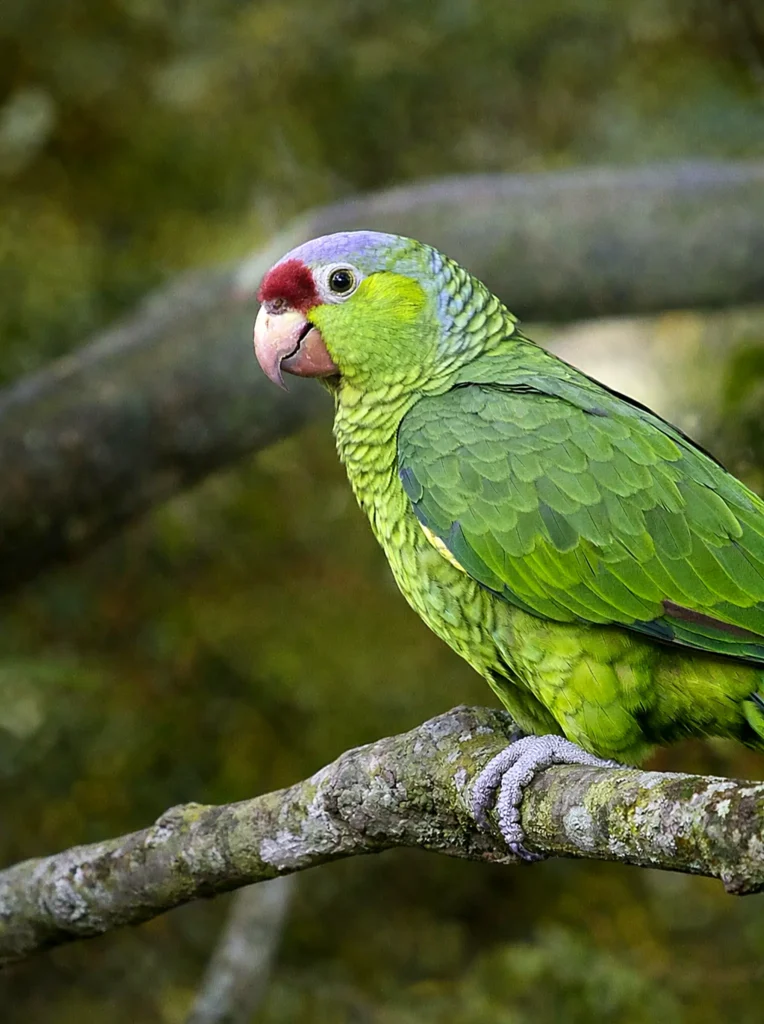
Lilac-crowned Amazons (Amazona finschi)
Flying overhead in small flocks, Lilac-crowned Amazons add constant sound and movement to the canopy. Their bright green plumage is accented by a maroon forehead and a soft violet-blue crown and neck.
Highly social and vocal, they communicate through a variety of squawks and calls as they travel between feeding and roosting sites, especially during early morning and late afternoon hours.
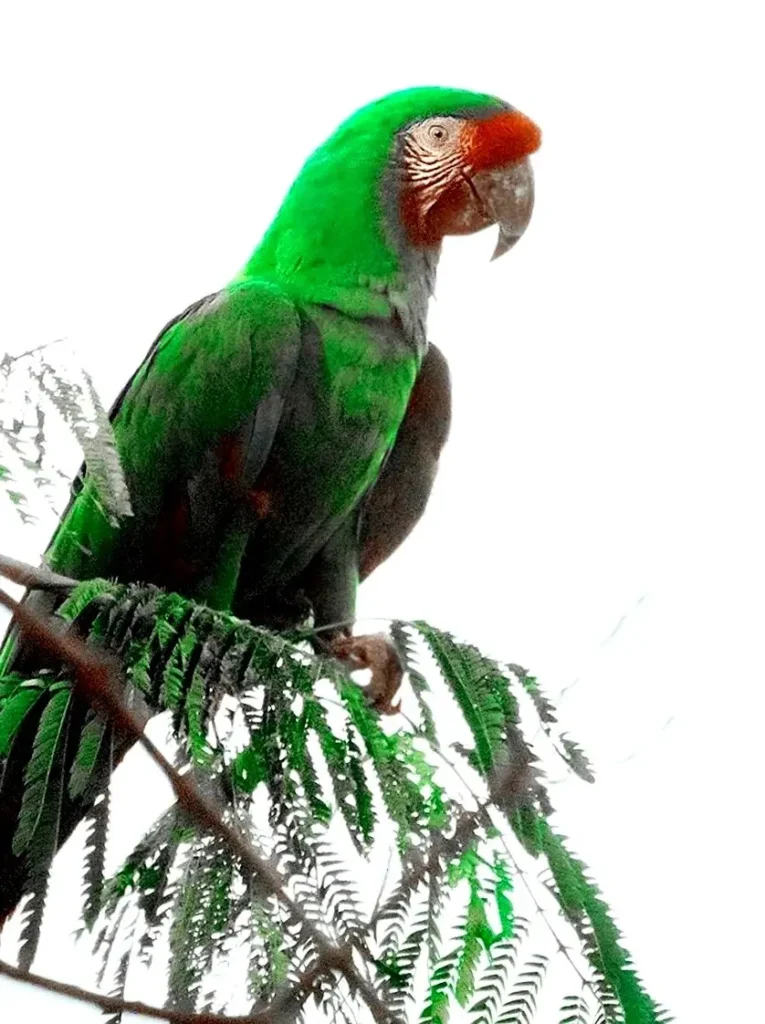
Military Macaws (Ara militaris)
Occasional sightings of Military Macaws are unforgettable, often announced by loud calls echoing above the forest. Their predominantly green plumage blends seamlessly with surrounding foliage, providing natural camouflage.
Adapted for life in the trees, they are zygodactyl, with two toes facing forward and two backward—an arrangement that allows them to climb, grip, and manipulate food with ease.
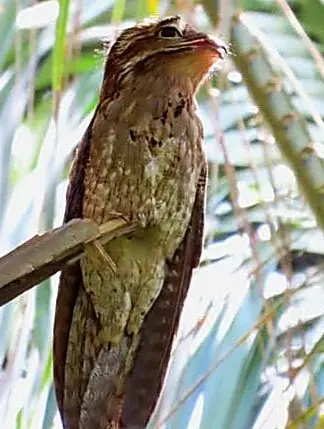
Northern Potoos (Nyctibius jamaicensis)
Perfectly still by day and active by night, Northern Potoos are among the most elusive birds in the region. They perch upright on branches, mimicking broken limbs with remarkable accuracy.
At night, they hunt flying insects, relying on exceptional camouflage and specialized eyelid slits that allow them to detect movement even while their eyes appear closed.
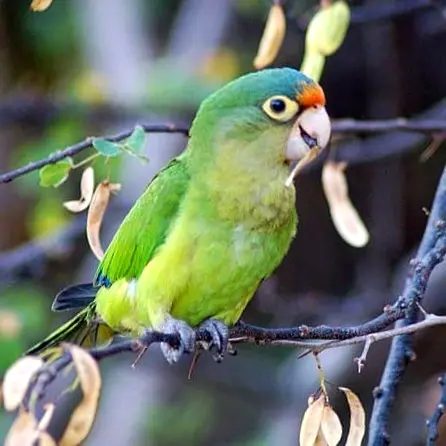
Orange-fronted Parakeets (Eupsittula canicularis)
Fast-moving flocks of Orange-fronted Parakeets flash through the trees with constant chatter. These social birds are commonly seen traveling in pairs or groups throughout the surrounding landscape.
They feed primarily on fruits, flowers, and seeds and are known for nesting in arboreal termite mounds, a behavior that can influence local insect communities over time.
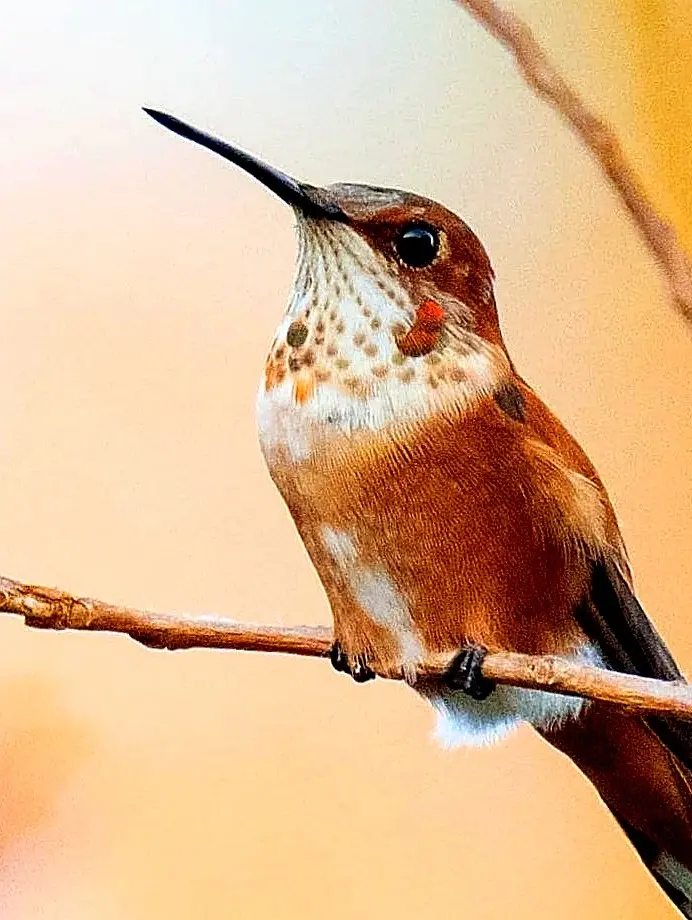
Rufous Hummingbirds (Selasphorus rufus)
Despite their small size, Rufous Hummingbirds complete one of the longest migrations of any bird relative to body weight, traveling nearly 4,000 miles each year. Their fearless temperament makes them dominant at feeding sites.
Rather than singing, they communicate with sharp chip notes, while their rapid wingbeats produce a distinctive buzzing sound.
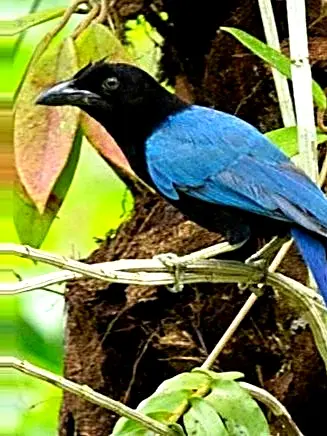
San Blas Jays (Cyanocorax sanblasianus)
Endemic to Mexico’s Pacific lowlands, San Blas Jays are energetic and social birds that move through forest canopies in small, noisy groups. Their deep blue plumage and long tails distinguish them from other regional jays.
Highly intelligent, they communicate constantly with a range of calls while foraging for fruit, insects, and small animals. Their presence often signals healthy lowland forest habitat and adds constant motion and sound to the canopy.
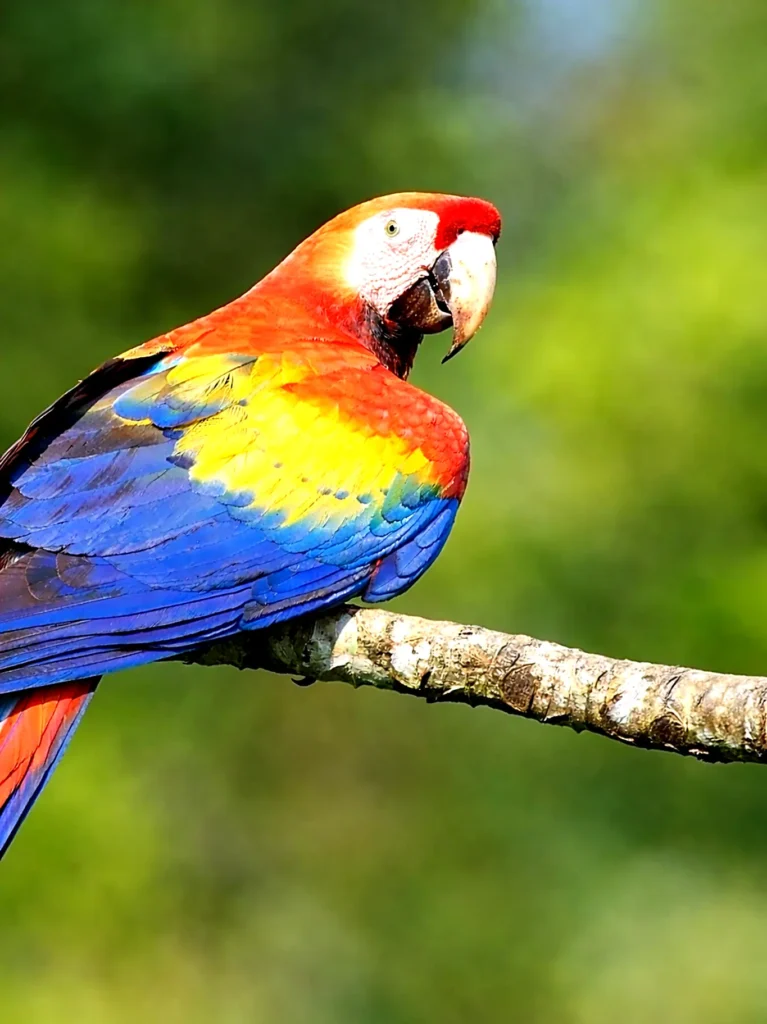
Scarlet Macaws (Ara macao)
Brilliant red plumage, bold yellow wings, and vivid blue tail feathers make Scarlet Macaws impossible to miss. These large parrots are among the most visually striking birds of the tropical Americas.
They form lifelong pair bonds and are commonly seen flying in pairs or small family groups, communicating with loud squawks that carry across wide forest expanses.
Streak-backed Orioles (Icterus pustulatus)
Bright orange-and-black coloration and a streaked back distinguish Streak-backed Orioles from other songbirds in the region. They feed largely on fruit but also consume insects, contributing to natural pest control.
Their pendulous nests are woven from plant fibers and often incorporate black fungal rhizomorphs, which help deter ants and other intruders.

Turquoise-browed Motmots (Eumomota superciliosa)
Often seen perched quietly before darting out to capture insects, Turquoise-browed Motmots are known for their vibrant coloration and distinctive racquet-shaped tails.
The unusual tail shape results from repeated preening, during which the birds deliberately snap off portions of the tail feathers ↗️.

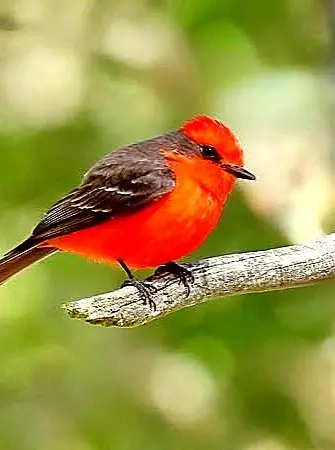
Vermilion Flycatchers (Pyrocephalus rubinus)
Striking in contrast despite their small size, Vermilion Flycatchers are easily recognized by the brilliant red plumage of adult males. Females appear more subdued, with softer tones.
During courtship, males actively advertise potential nesting sites. Once accepted, pairs form strong bonds and establish territories nearby.
White-throated Magpie-Jays (Cyanocorax formosus)
Highly intelligent and social, White-throated Magpie-Jays live in cooperative groups often led by a dominant female. These birds are among the most behaviorally complex in the region.
Female offspring frequently remain with the group to help raise subsequent broods, participating in nest defense and chick care.

Yellow-winged Caciques (Cassiculus melanicterus)
Conspicuous and energetic, Yellow-winged Caciques draw attention with their loud calls and bright yellow wing patches. Males also display a dramatic crest of head feathers during social interactions.
Their vocalizations often begin softly before erupting into harsh screeches. Hanging pouch nests are a defining feature, and these birds are frequent hosts to Bronzed Cowbirds, which lay their eggs in Cacique nests.

🌊 Seabirds, Shorebirds & Waterfowl
Sayulita’s beaches, estuaries, and nearby lagoons support a diverse mix of seabirds and wading birds. Some species are present year-round, while others arrive seasonally, drawn by abundant fish, shallow feeding grounds, and protected coastal habitats.
American White Pelicans (Pelecanus erythrorhynchos)
Among the largest birds in North America, American White Pelicans are impressive both in size and behavior, with wingspans reaching up to nine feet. These migratory birds winter in the region and are most often seen gliding effortlessly above calm waters.
Unlike diving pelicans, they feed cooperatively, floating together and scooping fish from the surface. Groups often work in unison to herd prey into shallow areas before feeding.

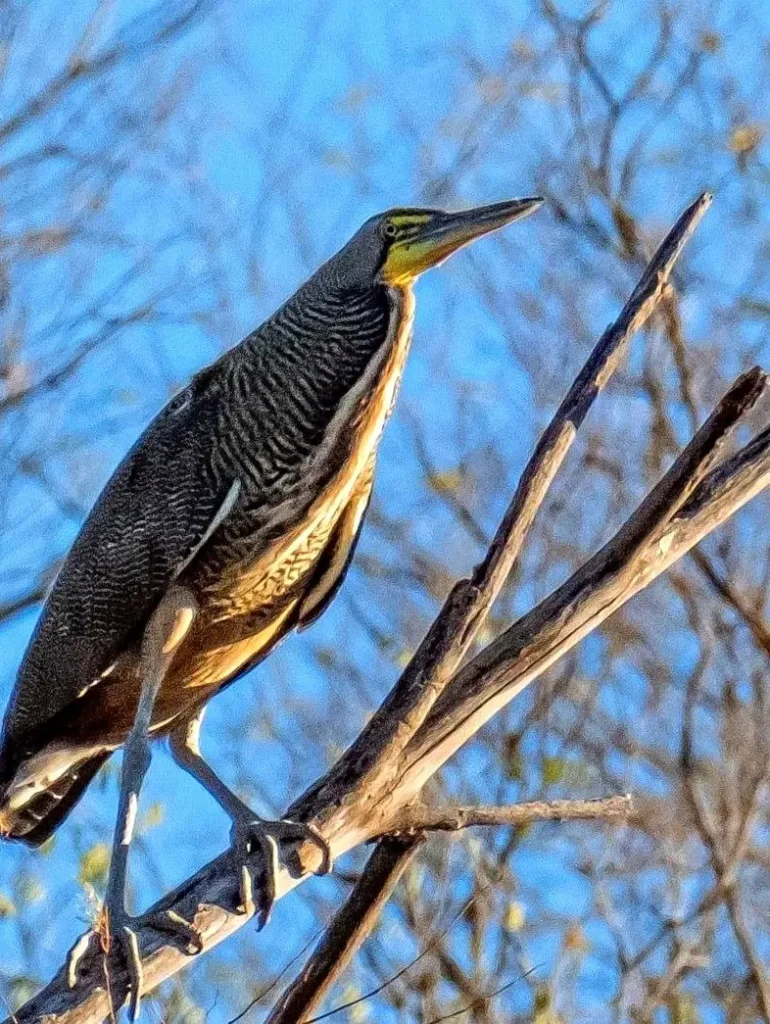
Bare-throated Tiger Herons (Tigrisoma mexicanum)
Distinctive and solitary, Bare-throated Tiger Herons are year-round residents of wetlands and riverbanks. Their bare throat and boldly patterned neck set them apart from other herons.
Patient hunters by nature, they often stand motionless for long periods before striking swiftly at fish, amphibians, or small reptiles. Their quiet presence rewards slow, observant birdwatchers.
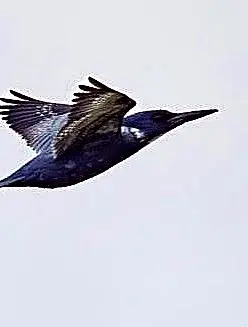
Belted Kingfishers (Megaceryle alcyon)
Stocky and unmistakable, Belted Kingfishers patrol rivers, estuaries, and inland waters with direct, rattling flight calls that often give them away before they are seen. Their oversized head, shaggy crest, and heavy pointed bill are perfectly adapted for fishing.
Rather than plunging from great heights, they hover briefly before diving headfirst into the water to seize small fish. In western Mexico, they are most often spotted near calm waterways, perching quietly above the waterline between hunting dives.
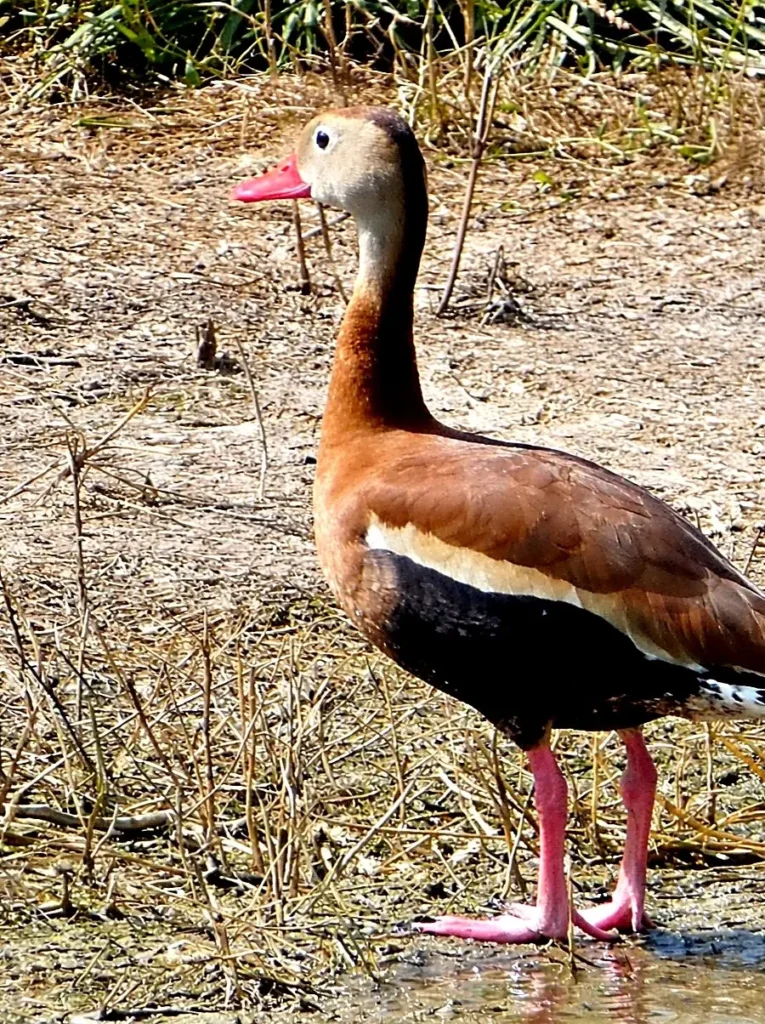
Black-bellied Whistling-Ducks (Dendrocygna autumnalis)
Recognizable by their reddish-brown bodies and musical whistling calls, Black-bellied Whistling-Ducks are commonly found near wetlands and lagoons. They are sometimes referred to as “tree ducks” due to their habit of nesting in tree cavities.
Unlike many ducks, they form long-lasting pair bonds that can endure for many years. Their social nature often results in small flocks resting or feeding together.
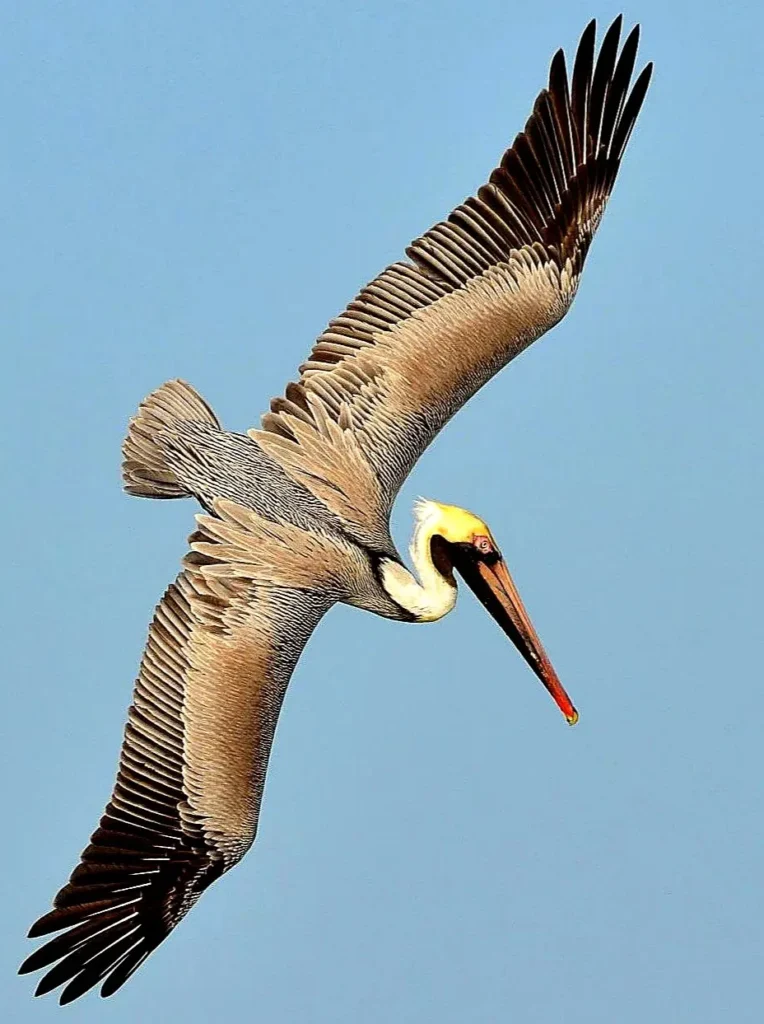
Brown Pelicans (Pelecanus occidentalis)
Fearless and dramatic, Brown Pelicans are known for their spectacular headfirst dives into the ocean as they plunge for fish.
These seabirds are present year-round along the coast and are frequently seen from Sayulita’s beaches.
Once endangered due to pesticide exposure, their recovery following the DDT ban stands as one of conservation’s major success stories ↗️. Today, they are a familiar and reassuring sight along the local shoreline.
Great Blue Herons (Ardea herodias)
Towering and statuesque, Great Blue Herons are the largest herons in North America, standing up to four and a half feet tall with wingspans approaching seven feet. They are frequently seen stalking shallow waters in estuaries and lagoons.
Their hunting technique relies on patience and speed, made possible by specialized neck vertebrae that coil into an S-shape, allowing for lightning-fast strikes↗️.

Great Egrets (Ardea alba)
Elegant and striking, Great Egrets are tall white wading birds with long necks and sharp yellow bills. Often seen standing motionless in shallow water, they embody calm precision.
Across many cultures, Great Egrets symbolize balance, purity, and resilience↗️. Their slow, deliberate movements contrast with the speed of their hunting strikes.

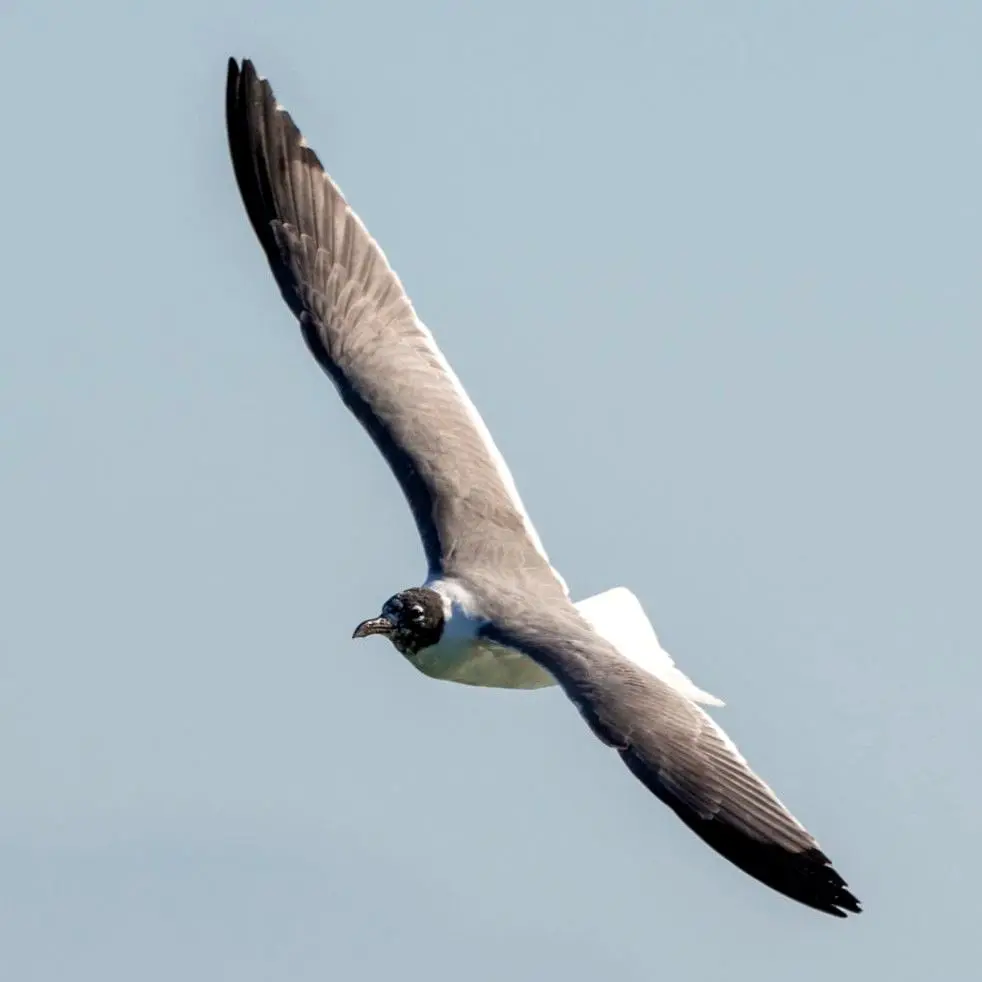
Laughing Gulls (Leucophaeus atricilla)
Bold and opportunistic, Laughing Gulls are year-round residents along the coast. They are identified by dark gray backs, black-tipped wings, and dark bills often tinged with red.
Highly adaptable scavengers, they are known for stealing food from other birds and even snatching fish directly from pelicans. Their raucous calls are a constant soundtrack near beaches and harbors.
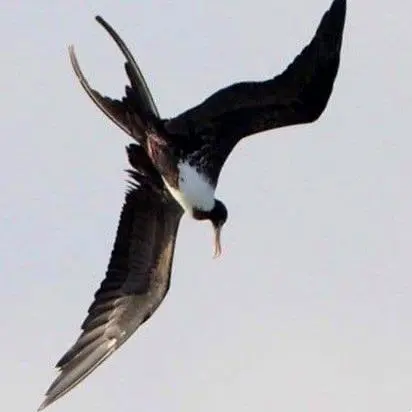
Magnificent Frigatebirds (Fregata magnificens)
Soaring effortlessly on long, angular wings, Magnificent Frigatebirds spend much of their lives in flight. Males are instantly recognizable by the bright red throat pouch they inflate during courtship displays.
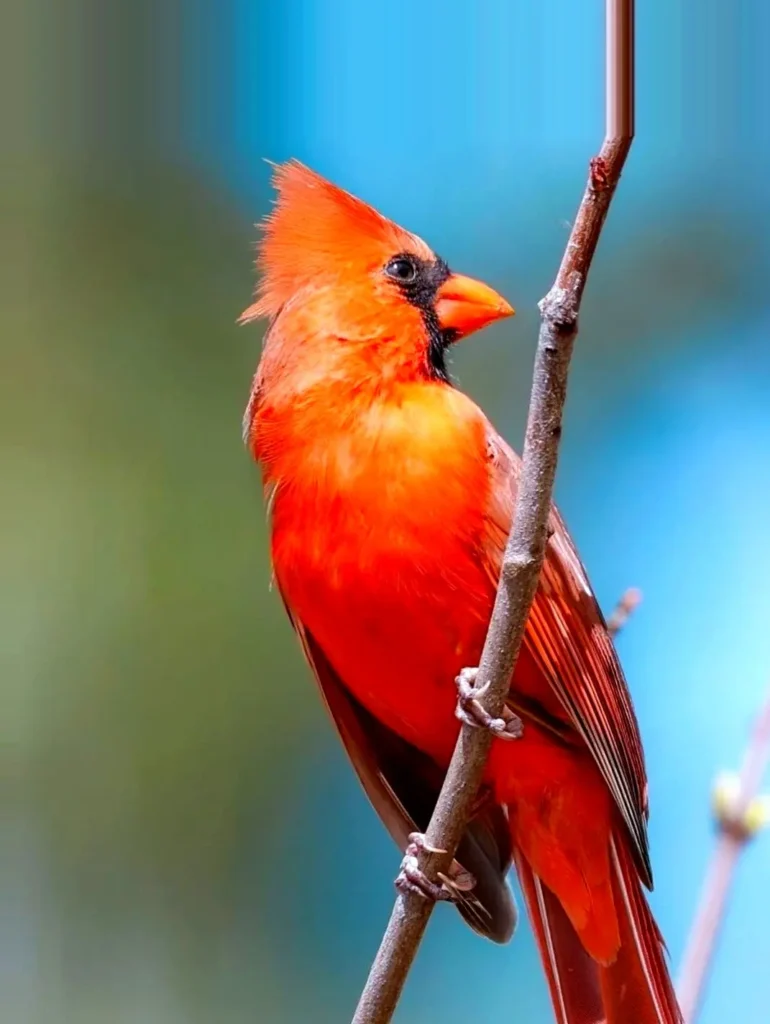
Northern Cardinals (Cardinalis cardinalis)
Brilliant red males stand out sharply against green foliage, while females show softer tan and rust tones accented by red highlights. Northern Cardinals are most often seen perched quietly in dense vegetation near forest edges and open clearings.
Though more common farther north, they appear locally as seasonal visitors or irregular residents. Their strong, conical bills are well suited for cracking seeds, while their clear whistles and sharp chips add color to the soundscape as well as the view.
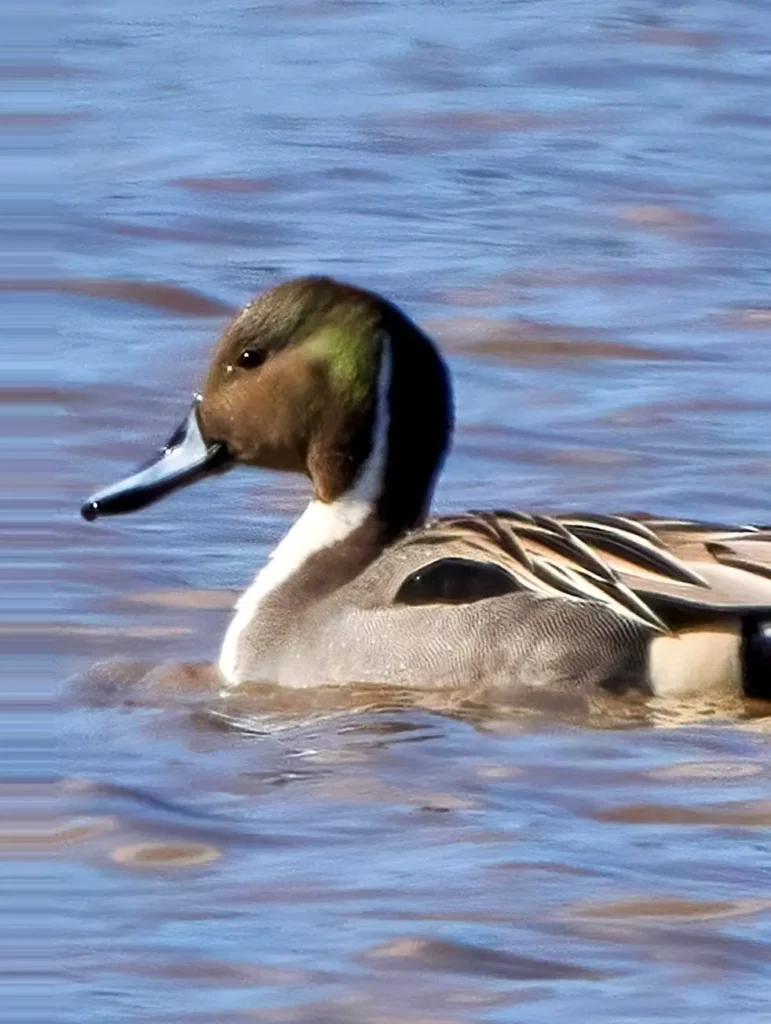
Northern Pintails (Anas acuta)
Graceful and streamlined, Northern Pintails are migratory waterfowl commonly seen in lagoons and wetlands during the winter months. They are among the earliest ducks to migrate north in spring.
Traveling primarily at night, they are capable of nonstop flights spanning up to 1,800 miles, a testament to their endurance and navigational skill.
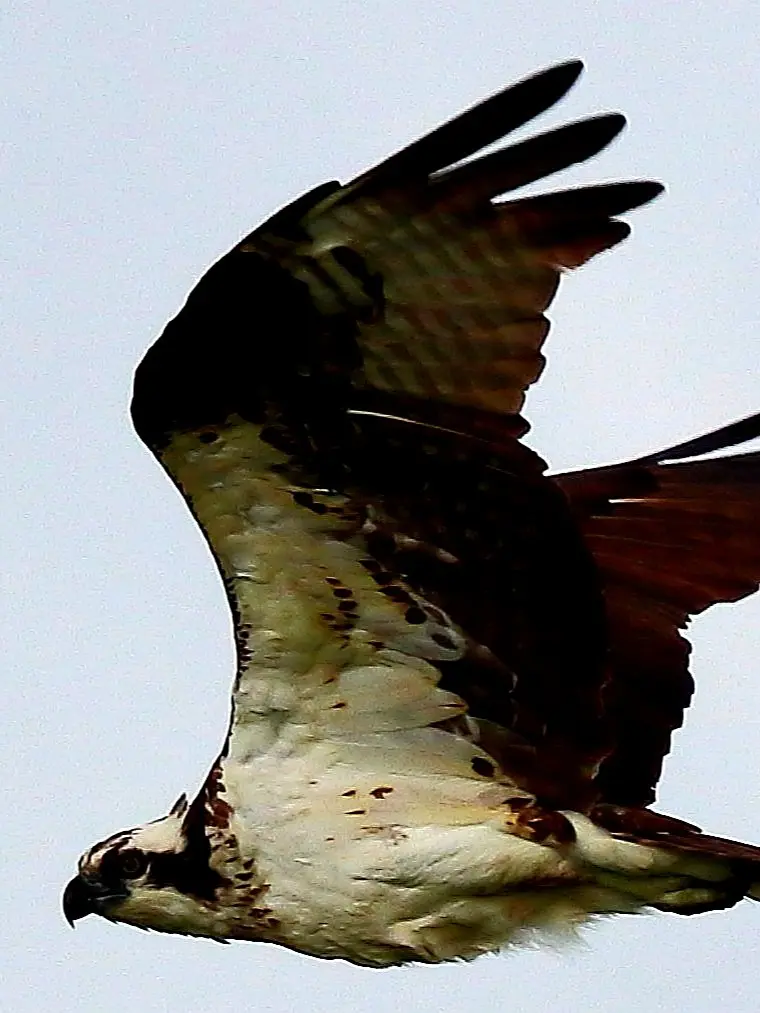
Ospreys (Pandion haliaetus)
Often seen hovering or perched near water, Ospreys are powerful fish-eating raptors that migrate south for the winter. Their diet consists almost entirely of fish.
Specialized adaptations—including reversible outer toes, barbed foot pads, and sharp talons—allow them to grip slippery prey securely↗️.
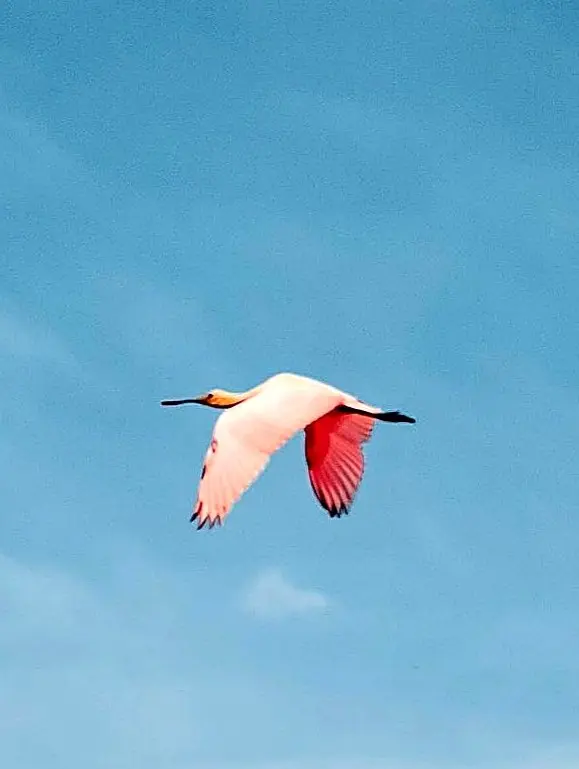
Roseate Spoonbills (Platalea ajaja)
Instantly recognizable by their spoon-shaped bills and vivid pink plumage, Roseate Spoonbills are striking wading birds found year-round in the region.
They feed by sweeping their bills side to side through shallow water, detecting prey by touch rather than sight. Small fish, crustaceans, and invertebrates make up the bulk of their diet.
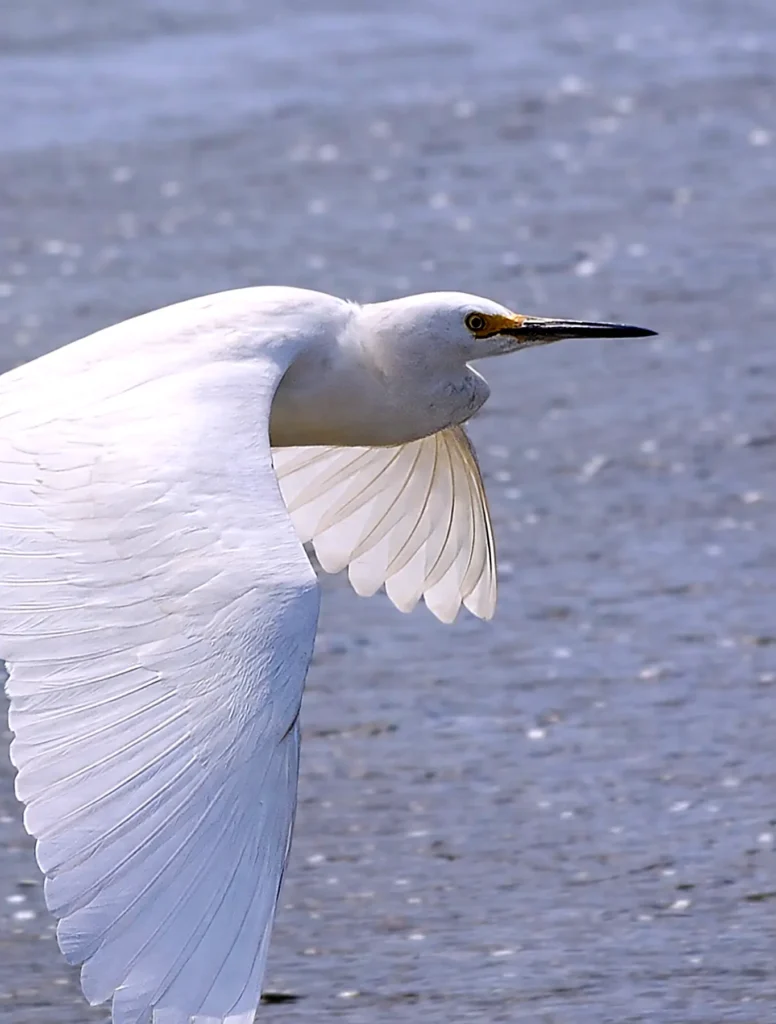
Snowy Egrets (Egretta thula)
Delicate in appearance but surprisingly assertive, Snowy Egrets are easily identified by their bright yellow feet. They forage actively in shallow waters, often stirring prey with rapid foot movements.
Once nearly driven to extinction by plume hunting, their populations rebounded thanks to protective legislation↗️.
🧭 Migratory Highlights
Each year, this stretch of the Pacific coast lies along important migratory routes that bring an influx of seasonal visitors. These birds add bursts of color, movement, and song—often appearing briefly before continuing their long journeys north or south.
Broad-winged Hawks (Buteo platypterus)
Compact and powerful, Broad-winged Hawks are best known for their dramatic migration behavior. During peak migration, they travel in massive flocks—sometimes numbering in the thousands—spiraling together on rising thermal currents.
These swirling formations, known as “kettles” or “boils,” are an unforgettable sight as the birds conserve energy while covering long distances↗️.

Painted Buntings (Passerina ciris)
Few birds rival the brilliance of Painted Buntings, whose plumage combines vivid blues, greens, reds, and yellows. These colorful songbirds winter in western Mexico, bringing flashes of color to forest edges and brushy areas.
Despite their striking appearance, they can be surprisingly shy, often remaining hidden in dense vegetation where their soft, melodic songs reveal their presence.

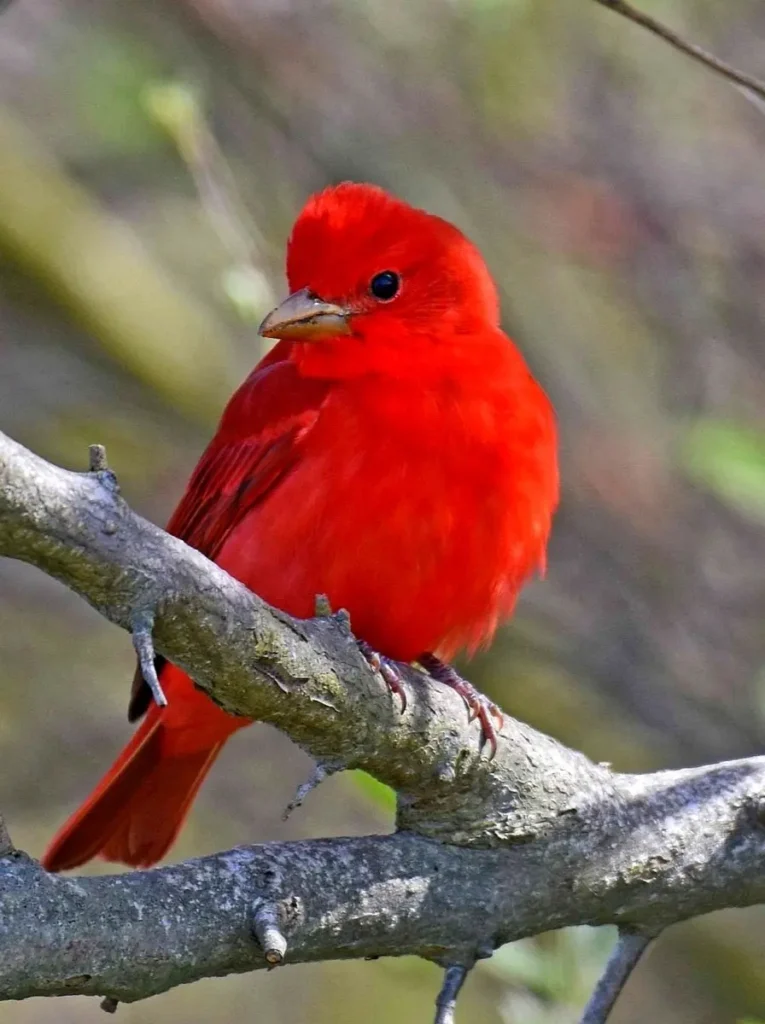
Summer Tanagers (Piranga rubra)
Male Summer Tanagers are easily recognized by their rich red plumage, while females display warm yellow-green tones. These birds pass through the region during migration, frequenting forest edges and open woodland.
Unusually, they specialize in catching and eating stinging insects such as bees and wasps, skillfully removing stingers before consuming their prey—a remarkable adaptation among songbirds.
❓ Frequently Asked Questions
🐦 Is Sayulita good for birdwatching?
Yes. This village offers coastal, estuary, and tropical forest habitats close together, making it easy to see a wide variety of bird species in a relatively short time.
📅 Best time for birdwatching in Sayulita
The best birdwatching season is November through March, when migratory species arrive and overall bird activity is highest.
🌎 How many bird species are in Nayarit?
Nayarit is home to more than 530 recorded bird species, making it one of Mexico’s top regions for birdwatching.
🔍 What birds can you see in Sayulita?
Common sightings include colorful songbirds, soaring raptors, and coastal shorebirds. This guide highlights 39 species frequently seen around Sayulita, grouped by habitat.

🎟 Bird Watching Tours in Sayulita
For some of the best birdwatching trails in the surrounding region, explore All Trails↗️
Top of Form
Sayulita Bird Watching Tours
📞 +52 322 173 4978 | ✉️ info@sayulitabirdwatching.com
What Guests Say: “We took this tour in early January and enjoyed every minute of it!”
Birding for Beginners Tours
What Guests Say: “Fun and educational jungle hike.”
For hiking tours, explore our blog Ocean and Jungle Wildlife .

🌿 Amari’s Tip for Birdwatching
For the best birdwatching experience, head out early in the morning or late in the afternoon when bird activity is highest. Wear comfortable, earth-toned clothing, and bring binoculars, a camera, water, and sun protection. Most importantly, move slowly, listen carefully, and allow the landscape to reveal its natural rhythm.
For even more birding adventures, a trip to the Marietas Islands is highly recommended — not only for dramatic seascapes, but also for the 92 species of tropical birds that inhabit them, including the iconic Blue-footed Booby.
🔎 Explore More Sayulita Travel Questions
Wondering where to explore, eat, swim, spot wildlife, or unwind? Our curated Travel Guides help you discover the area at your own pace, with local insight and practical tips.
For quick answers, visit our Interactive Travel FAQ , where you can search more than 140 commonly asked questions—from hidden beaches to regional flavors and seasonal highlights.
If safety is top of mind, our Safety Guide for Travelers offers helpful guidance so you can explore confidently before and during your stay.
For more wildlife information, please explore our blogs: 🦜 Ocean and Jungle Wildlife · 🔒 Wildlife in Nayarit Is Safe · 🐟 Fish in Bay of Banderas

🏨 Searching for a Top Rated Hotel in Sayulita? Discover Amari Boutique Hotel
Amari Boutique Hotel offers calm Pacific views and an atmosphere designed for slow, restorative stays. Mornings are peaceful, evenings are quiet, and nature quietly sets the rhythm — from ocean breezes to occasional dolphin sightings offshore.
🌿 Wellness & Quiet Comfort
Guests unwind with thoughtful wellness amenities, including serene spaces designed for rest and renewal after days spent exploring jungle trails or coastal waters.
🌸 Design & Conscious Living
Each suite reflects mindful craftsmanship and sustainable values. Explore elevated comforts — including the saltwater pool, sauna, and cold plunge — in our curated amenities collection.

📚 Source Information:
Sayulita’s diverse coastal, estuary, and tropical forest habitats support a wide range of resident and migratory bird↗️species and have earned recognition in national publications, including USA TODAY↗️.
Species accounts and regional distribution data for this guide are drawn from established ornithological and conservation resources, including Birds of the Riviera Nayarit↗️ , Birds of the World↗️, and Mexican Birds↗️.
Additional sighting records and checklists reference eBird hotspot data↗️ and the broader eBird database↗️.
For a full overview of beaches, culture, food, weather, and logistics, explore our Plan Your Trip to Sayulita Guide.
