Sayulita Fishing Guide: Tours, Charters, Fish Species & How to Catch Them
Year-round action makes Sayulita an angler’s paradise, whether you’re casting from the beach, hiring a local panga for a quick morning on the water, or chasing trophy pelagics with a seasoned captain. Visitors love the excitement, and experienced anglers appreciate the reef predators, schooling species, and seasonal billfish that make these waters rewarding year-round.
📍 What This Guide Covers
This guide details fourteen of Sayulita’s most common gamefish and how to catch each one — including where to find them, what bait and lures to use, how to present them, and the recommended tackle for local conditions.
💡 Tip: Use the index below for fast navigation between fishing methods and fish species.
New to Sayulita? Visit our Plan Your Trip to Sayulita Guide.
📑 Index — Navigate This Guide
🎣 Guaranteed to Catch Fish • 🌊 Types of Fishing Available • 🐟 Species of Fish & How to Catch Them ( Amberjack • Black Marlin • Blackspot Snapper • Crevalle Jack • Dorado • Grouper • Huachinango • Pacific Blue Marlin • Pacific Sierra • Roosterfish • Sailfish • Striped Marlin • Yellowfin Tuna • Wahoo ) • 🚤 Pangas & Charters Available • 📈 Ready to Fish
🎒 Amari’s Tips • ⭐ Traveler Fishing Reviews • 🏝️ Stay Near the Action • 🎣 Book & Go Fishing • ✔️ Best Hotel for Anglers • 🔎 Travel FAQ
🎣 Guaranteed to Catch Fish
If you stay at Amari Boutique Hotel and book your charter through us—and you’re not happy for any reason—we’ll buy your fish dinner.
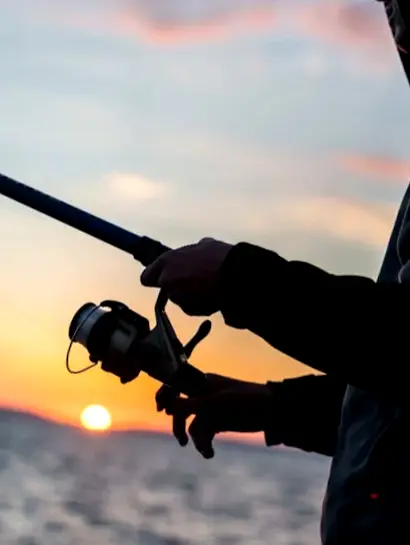
Types of Fishing Available
Surfcasting
Fishing from the beach commonly produces Snook, Roosterfish, Sierra, Snapper, and Jacks, especially around structure and during stronger tidal swings. Effective lures include small crocodile spoons, metal jigs, and mid-size Rapala-style plugs.
No fishing license is required for shore casting in Mexico. For more local fishing and travel information, see our Sayulita Travel FAQ.
Fishing from a Panga
Sayulita’s pangas provide nearshore action — often hooking Tuna, Bonita, Huachinango (Red Snapper), Dorado, or Roosterfish, with a chance to spot dolphins or whales in the right season. Most captains supply bait, tackle, and ice.
Professional Charters
For larger pelagics and trophy fish, including Amberjack, Blue Marlin, Striped Marlin, Mahi (Dorado), Sailfish, Tuna, Snapper, and Wahoo. Longer runs and heavier gear provide access to deeper migration routes, bait concentrations, and offshore temperature lines.
Species of Fish; and How to Catch Them
Amberjacks (Coronado)
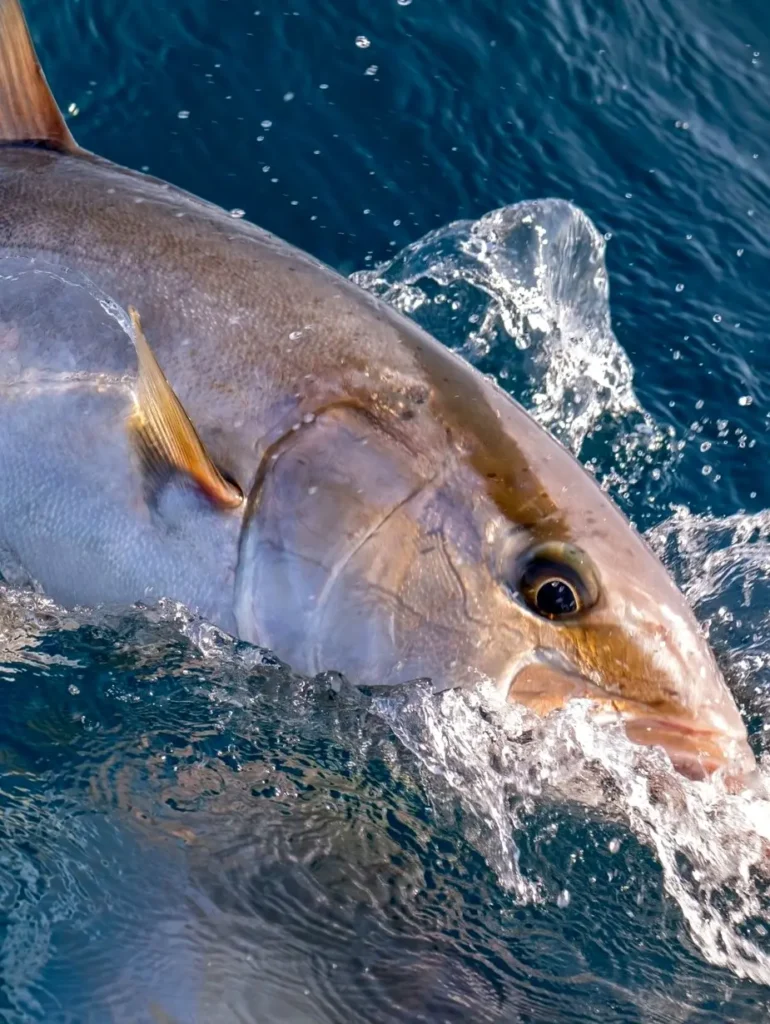
An aggressive, hard-pulling fighter typically caught between 5–20 lbs., though the world record is 142 lbs. Their stubborn dives and nonstop runs have earned them the nickname “reef donkeys.” They’re excellent eating with a rich, buttery flavor. Amberjack are caught year-round, with slower action from August through November.
How to Catch Amberjack
Learn proven tactics from the full guide on Amberjack fishing techniques.
Where to Find the Fish
Amberjack congregate around reefs and wrecks. Bottom fishing with a drop to the seafloor or vertical jigging is common. Drifting and trolling can also be effective when fish push bait higher in the water column.
Bait, Lures & Presentation
They strike most baitfish aggressively and can be drawn up by chumming, then hit with topwater offerings. Effective options include live bait, jigs, spoons, or large swimbaits once fish are active near the surface.
Tackle Required
Heavy setups are recommended: 60–80 lb. braided line, a 6–10 ft. fluorocarbon leader (80–100 lb.), and 7/0–10/0 circle hooks. Strong drag is a must to stop downward runs into structure.
Black Marlin
How to Catch Black Marlin
Learn proven strategies from the full guide on Black Marlin tactics.
Where to Find the Fish
Black Marlin follow concentrations of baitfish. Locating schools of bonito or mackerel near drop-offs, underwater high spots, or humps is essential. Once bait is found, marlin are often close by, holding above or alongside structure.
Bait, Lures & Presentation
Most Black Marlin are hooked by slow-trolling large live baits or skipping dead baits. Faster trolling with large rubber-skirted lures also produces strikes. Hookless teasers followed by a bait-and-switch approach is a proven tactic. Common live baits include skipjack tuna (2–10 lbs.) and mackerel.
Tackle Required
Heavy gear is mandatory: 80–130 lb. class rods and reels, 150–250 lb. test line, and a strong fluorocarbon leader with sturdy circle hooks. Large lures such as Mold Craft Soft Heads, Black Barts, and Pakulas are proven producers.
Blackspot Snapper
How to Catch Blackspot Snapper
For detailed bait and method tips, see the full guide on Snapper bait selection.
Where to Find the Fish
Juvenile snappers hide around mangroves, oyster beds, and inshore structure (100–150 ft.), but larger fish usually inhabit offshore reefs and ledges in 200–300 ft. Incoming and outgoing tides produce the best action, as moving water flushes baitfish into feeding zones.
Bait, Lures & Presentation
Live bait performs best, especially mackerel, bonito, small tuna, and squid. Cut bait works when live fish aren’t available. Lures can also produce — including swimbaits, jigs, and jerkbaits in flashy baitfish colors.
Tackle Required
Use a medium-action spinning rod paired with a 3000–4000 size reel, 10–20 lb. braided line, a fluorocarbon leader, and 1/0–3/0 circle hooks. Choose enough weight to keep your bait close to the bottom.
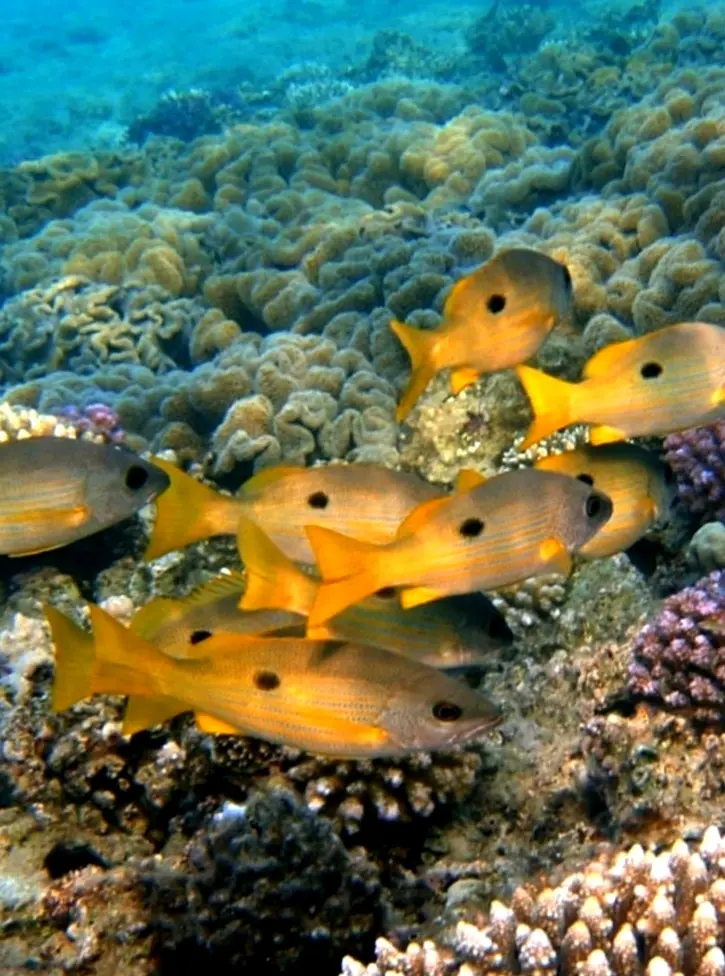
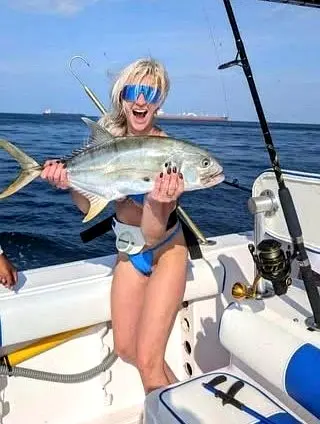
Crevalle Jack
A strong, aggressive fighter commonly caught between 1–10 lbs., with larger fish reaching 20 lbs. (the world record is 57 lbs.). While not usually favored for eating due to its strong flavor, it’s highly valued for its power and speed, making it a fun and reliable catch throughout most of the year.
How to Catch Crevalle Jack
For proven techniques, see Crevalle Jack tactics.
Where to Find the Fish
Crevalle Jacks chase bait aggressively and often push prey to the surface. Look for surface boils, bird activity, reefs, channels, and inlets, especially when currents are strong. They often appear where baitfish are being corralled.
Bait, Lures & Presentation
Local live bait works well, but artificials are also highly effective. Use poppers, jerkbaits, spoons, metal jigs, or topwater plugs, retrieving quickly and aggressively. When trolling, use Rapalas or similar large plugs.
Tackle Required
Use a medium-to-heavy spinning or baitcasting setup with 200 yards of 20 lb. braided line, plus a 20–40 lb. fluorocarbon leader. Select a 4/0 circle hook or a 1/0 bait hook depending on bait size.
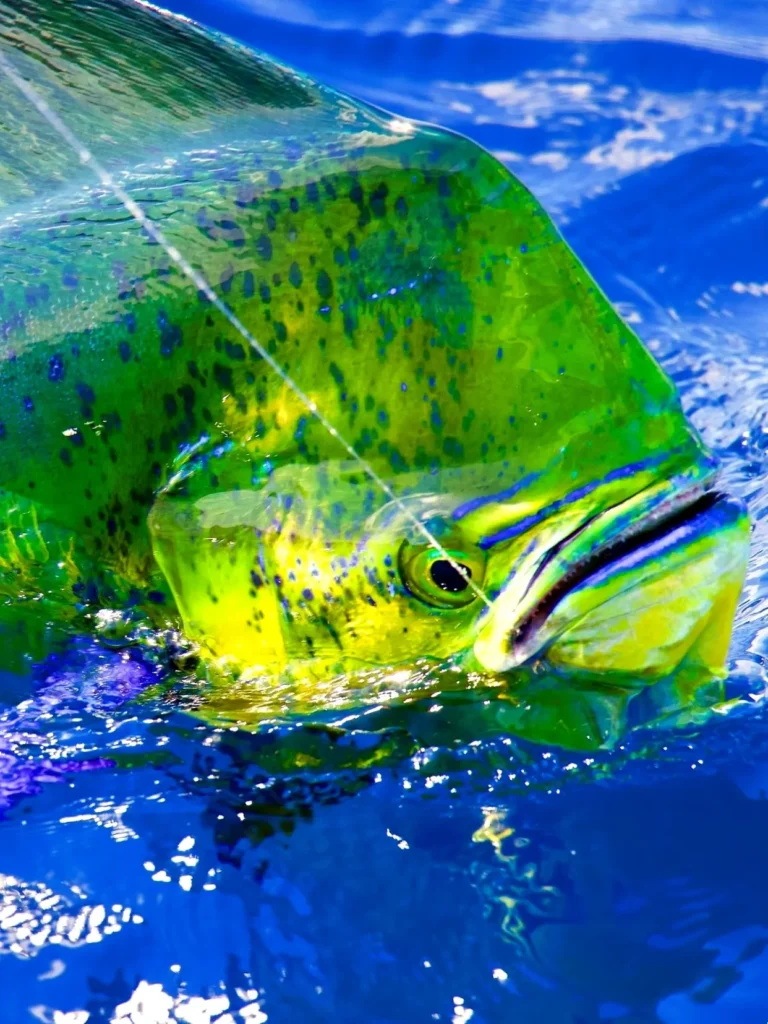
Dorado (Mahi-mahi)
One of the fastest-growing fish in the ocean, highly prized for both its fight and quality on the table. Commonly ranging from 20 to 40 lbs. (with the world record at 87 lbs.), Dorado are known for their acrobatics, aggressive strikes, and vivid blue-green-yellow colors. They’re regularly caught from September through April.
How to Catch Dorado
For detailed tactics, see Dorado techniques & setups.
Where to Find the Fish
Look for floating debris, weed lines, offshore structure, and flying fish, one of their favorite food sources. After rains, washed-out debris can create temporary feeding zones that attract larger Dorado.
Bait, Lures & Presentation
Trolling rubber skirts, feathers, and plugs such as Rapalas is highly effective. Sardines and Pacific mackerel are excellent live bait options, with larger Dorado often preferring larger baits. Chumming can be especially productive, as Dorado are notorious gluttons and will stay near the boat if continuously fed.
Tackle Required
Use a medium-weight conventional setup with 20–50 lb. test line, ideally braid with a 100-yard monofilament top-shot, along with monofilament leaders and swivels. J-hooks (e.g., 1/0) work well, as Dorado tend to slash at bait rather than inhale it. Many anglers prefer a lighter baitcasting setup for maximum sport.
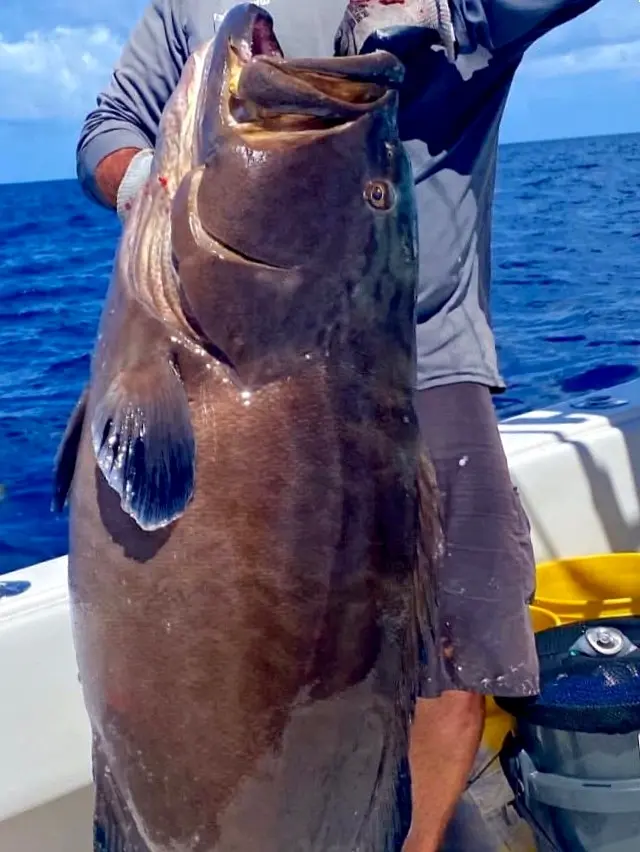
Grouper
Powerful reef predators commonly caught around 50 lbs., with larger specimens exceeding 100 lbs. They’re excellent eating, with a mild, clean flavor similar to seabass. Most Grouper fight by diving quickly toward structure, making the opening seconds of the battle critical.
How to Catch Grouper
For strategies on bait and depth, see Grouper techniques.
Where to Find the Fish
Grouper lurk around reef systems, wrecks, caves, and rocky ledges, ambushing prey that swims too close. Bottom fishing is most common, while jigging works well by changing speed and depth. Trolling can hook Grouper but is less efficient because they prefer structure-oriented strikes.
Bait, Lures & Presentation
Live bait is the most productive, typically hooked through the upper lip for lively movement. When live bait isn’t available, dead bait such as sardines or bonito works well due to its scent. Grouper also strike deep-diving crankbaits, jigs, and soft plastics in vibrant colors.
Tackle Required
A strong rod and high-drag reel are essential. Use 60–100 lb. braided line, a heavy fluorocarbon leader, and circle hooks. Choose enough weight to stay near the ocean floor. The lack of line stretch with braid helps prevent Grouper from diving into holes.
Huachinango (Red Snapper)
One of the region’s most popular eating fish — mild, versatile, and flavorful. Most catches fall under 10 lbs., though the world record reaches 50 lbs. (commonly called Pargo in Mexico). They’re caught year-round, with peak action from April through July.
How to Catch Red Snapper
See the full breakdown of methods here:
Red Snapper techniques
Where to Find the Fish
Red Snapper gather around rocks, wrecks, reefs, and other structure from 30 ft. to well over 500 ft. Bottom fishing, jigging, drifting, and anchoring all work well. Moving tides and current shifts can help trigger bites as bait becomes more active.
Bait, Lures & Presentation
Live bait — especially sardines or mullet — works best for larger fish. Fresh cut bait such as squid, shrimp, or small fish also produces. Metal jigs, soft plastics, and bucktail jigs imitate prey and draw strikes. Chumming is often productive, helping draw Snapper closer to the boat.
Tackle Required
Use a medium-to-heavy action rod with a strong spinning or conventional reel, 20–50 lb. braided line, and a fluorocarbon leader (20–80 lb.) for abrasion resistance. Circle hooks help with clean hookups. Select weight based on depth — just enough to keep your bait near the bottom.

Pacific Blue Marlin
Frequent Sayulita’s offshore waters from July through April, with many fish ranging from 150 to 500 lbs., and world records surpassing 1,400 lbs. Known for violent head shakes, blistering runs, and acrobatic battles, Blue Marlin are a prized catch and are commonly released to protect the species.
How to Catch Pacific Blue Marlin
For proven lure and rig setups, see
Pacific Blue Marlin tactics.
Where to Find the Fish
Target Blue Marlin near bait concentrations, temperature lines, and offshore structure, similar to tactics used for Black Marlin. Trolling is the most consistent approach, especially when following schools of bonito and mackerel.
Bait, Lures & Presentation
Blue Marlin strike both rigged dead bait and artificial lures. Many captains use outriggers and run additional lures flat off the transom. Slow-trolling live bait is also effective when using circle hooks to reduce gut-hooking. Popular lure brands include Mold Craft, Black Bart, and Moyes.
Tackle Required
Heavy gear is essential. Professional charters supply large-game rods, high-capacity reels, strong fluorocarbon leaders, and circle hooks appropriate for billfish.
Pacific Sierra (Mexican Sierra)
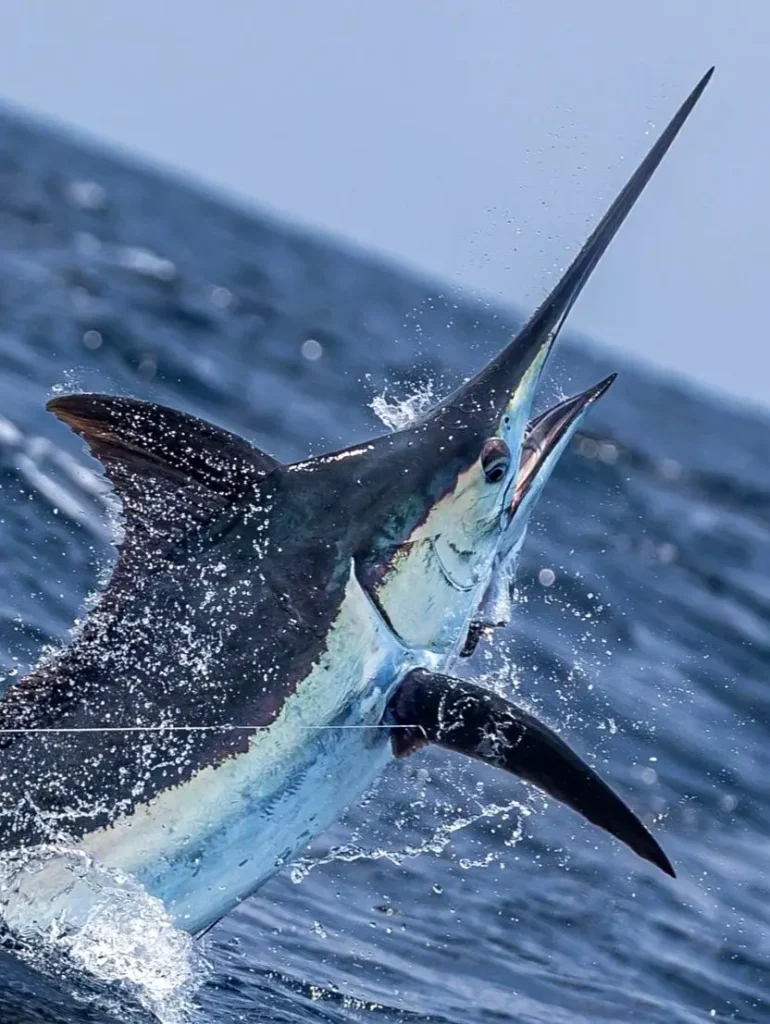
A fast, hard-hitting light-tackle species commonly caught at 1–3 lbs., though fish over 10 lbs. are possible (the world record is 13 lbs.). A fierce fighter and excellent table fish, Sierra are known for sharp runs and clean, flaky fillets.
How to Catch Pacific Sierra
For lure choices and methods, see
Pacific Sierra techniques
Where to Find the Fish
Sierra school in nearshore waters around 50 ft., often near reefs, rocky outcrops, and drop-offs. Look for bait activity — anchovies, sardines, and seabirds often signal feeding fish.
Bait, Lures & Presentation
Slow-trolling live bait or lures just beneath the surface is highly productive. Use the lightest wire leader possible to prevent bite-offs without reducing strikes. Jigging also works when fish are deeper. When bait schools are visible, cast fast, twitching presentations using lures like Krocodile spoons, Rapalas, and flashy streamers.
Tackle Required
A light to medium spinning outfit is ideal. Thirty-pound braid paired with a Daiwa Certate 3000–4000 reel is a popular setup. Use a light wire leader to prevent cut-offs from sharp teeth, especially when trolling or retrieving quickly.
Roosterfish
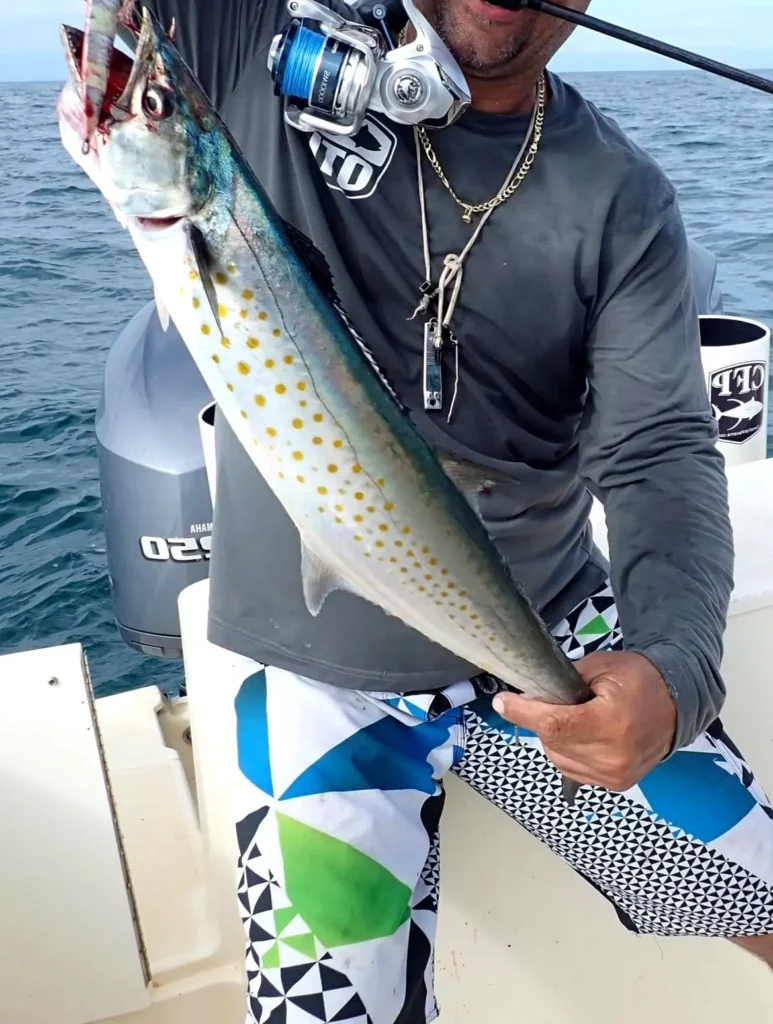
Notorious for explosive surface strikes, long runs, and dramatic jumps. Commonly caught between 10–30 lbs., with rare giants exceeding 100 lbs., they’re prized for the fight — not the flavor. Their meat is dark and oily, making them an unpopular eating fish but an unforgettable sport catch.
How to Catch Roosterfish
For a breakdown of tactics and live bait strategy, see Roosterfish methods & gear
Where to Find the Fish
Roosterfish feed most aggressively on rising and falling tides, especially near rocky points, sandy channels, and structure close to shore. Free-lining live bait in these areas is highly effective. During the rainy season, they often hunt along the edges of cleaner water, ambushing prey moving out of murky runoff.
Bait, Lures & Presentation
Live bait is king — typically slow-trolled sardines, with small bonito used for trophy fish. For pure sport, anglers also use topwater plugs such as Ranger-style lures and Yo-Zuri bull poppers. If Roosters refuse surface baits, switch to swimbaits worked erratically near structure. Their raised dorsal fin and chaotic runs make the fight visually exciting.
Tackle Required
When targeting Roosterfish from shore, many anglers use a 10–12 weight fly rod with a strong reel capable of handling long runs and sustained pressure. Whether fly or conventional, gear should be sized to absorb powerful surges without allowing the fish to reach structure.
Sailfish
How to Catch Sailfish
For lure and bait breakdowns, see Sailfish tactics & presentation
Where to Find the Fish
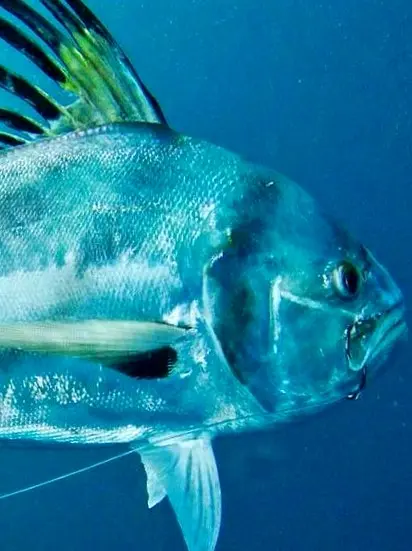
Watch for leaping baitfish, which can signal Sailfish feeding. They are often near underwater structure or working bait lines. If they aren’t visible, troll faster with lures to cover more water and draw strikes.
Bait, Lures & Presentation
Slow-trolling live bait such as small ballyhoo, mullet, or a Panama strip cut from bonito or tuna is highly effective. For lures, use smaller versions of marlin skirts in purple-red or pink-red-white. Position baits based on depth: nose-hooked or dorsal-hooked rigs alter swimming action and how deep they run.
Tackle Required
Use a 6–7 ft. rod rated for 10–30 lb. line, along with a 20–30 lb. class conventional reel and high-visibility 20 lb. line. A 10 ft. fluorocarbon leader (60 lb.) protects against abrasion, paired with 6/0–7/0 circle hooks to promote clean release.
Striped Marlin
How to Catch Striped Marlin
See full lure and live bait strategies here: Striped Marlin presentation & tactics
Where to Find the Fish
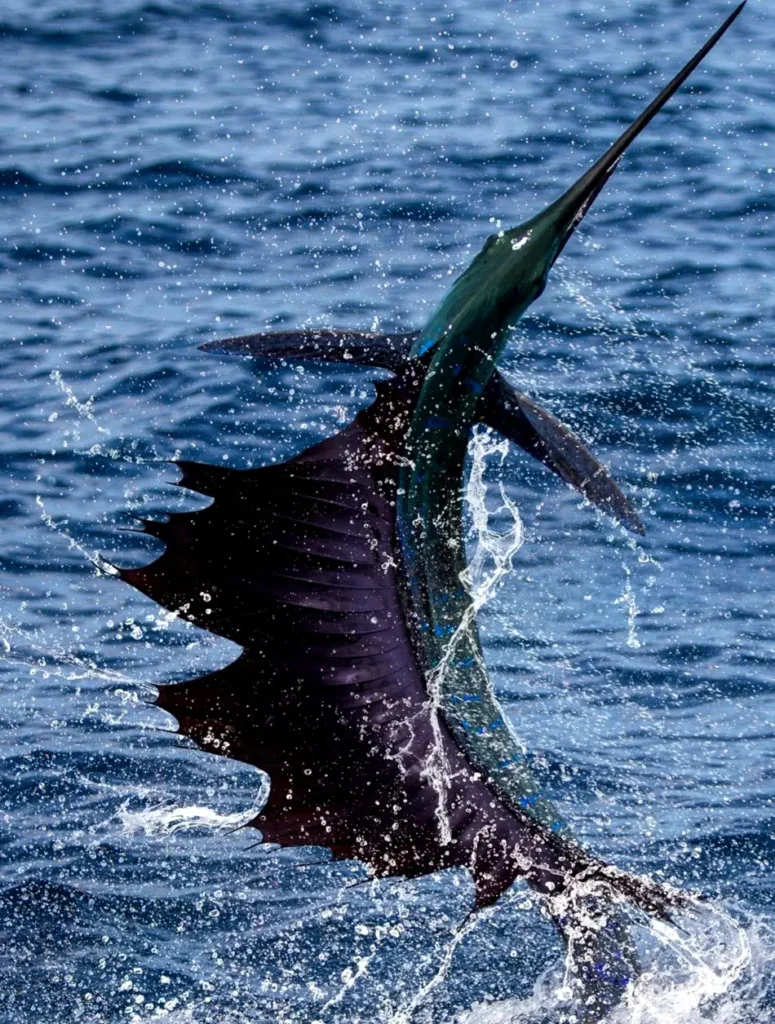
Unlike Black or Blue Marlin, Striped Marlin often stay closer to the surface. Slower trolling speeds with live mackerel are especially productive. They can also be sight-cast when they tail or push bait into surface “boils,” a reliable sign of feeding fish.
Bait, Lures & Presentation
Effective choices include ½–1 ft. skirted lures in orange, brown, or black to mimic forage fish. Live mackerel works especially well when Striped Marlin are visible near the surface, particularly around boils.
Tackle Required
Medium-weight conventional setups with 50 lb. braid are standard. Many anglers choose slightly lighter tackle to prevent the fish from diving too deep early in the fight, keeping the battle more manageable and exciting.
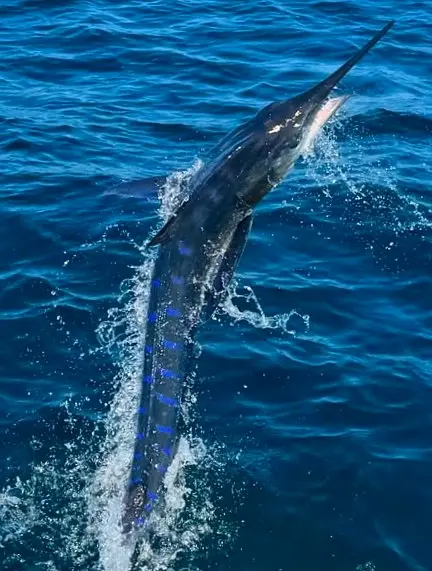
Yellowfin Tuna
Powerful and streamlined predators ranging from just a few pounds to nearly 400 lbs. Recognizable by their metallic blue backs and bright-yellow fins and finlets, they’re prized for both hard fights and excellent eating quality. Yellowfin are among Sayulita’s most dependable offshore targets.
How to Catch Yellowfin Tuna
For a breakdown of live bait, lure tactics, and trolling spreads, see Yellowfin Tuna tips & techniques
Where to Find the Fish
Tuna feed both at the surface and deeper in the water column. Look for actively feeding birds, surface boils, or bait schools. Chumming helps keep fish near the boat. Jigging can also produce when fish are deeper or moving quickly through an area.
Bait, Lures & Presentation
For trolling, reliable choices include tuna feathers, cedar plugs, and plastic skirted lures, especially in blue-and-white patterns. Casting into feeding schools can be very effective, and fly fishing is possible with heavy gear and large baitfish patterns. Live bait options include anchovies and sardines, while larger fish tend to prefer Pacific mackerel.
Tackle Required
Use a sturdy rod and high-capacity reel with 50–80 lb. test line and a fluorocarbon leader. Circle hooks are preferred because they’re harder for tuna to eject. Smooth drag is essential for long runs.

Wahoo
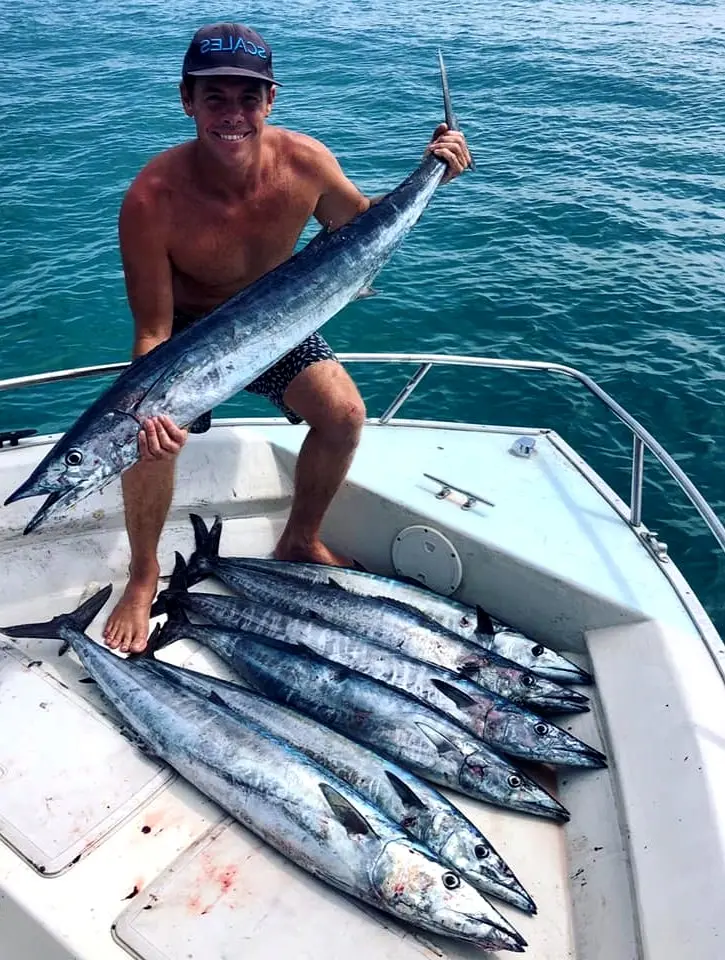
Among the fastest fish in the ocean, capable of reaching speeds over 60 mph. Typically caught between 20–50 lbs., with rare fish exceeding 100 lbs., they’re known for scorching runs and razor-sharp teeth. Wahoo are also excellent table fare, with firm, mild meat well-suited for grilling or sashimi.
How to Catch Wahoo
For lure styles and high-speed trolling insights, see Wahoo tactics & lure selection
Where to Find the Fish
Wahoo often hunt along drop-offs, temperature shifts, and floating structure. They’re attracted to fast-moving prey and commonly strike lures at higher trolling speeds, sometimes up to 15 knots or more.
Bait, Lures & Presentation
High-speed trolling is the classic approach. Skirted lures, diving plugs, and rigged baits behind trolling weights help lures track straight at fast speeds. Use wire leaders to prevent bite-offs, especially on quick presentations. When casting to actively feeding Wahoo, metal jigs or flashy spoons can trigger violent strikes.
Tackle Required
Use a medium-heavy rod, a high-capacity reel, and strong drag. Pair 40–80 lb. line with a wire leader. Keep steady tension — Wahoo make sudden, powerful runs, and slack line can lead to lost fish due to teeth or head shakes.
Pangas & Charters Available
Chawin Fishing Sayulita & Ocean Sports
📞 +52-322-194-1623Captain Pablo’s Adventures
Let’s Go Fishing Sayulita
📞 +52-322-227-3144Pescadores Sayulita – Sport Fishing
Sayulita’s Fishing Report
For week-to-week action, target species, and seasonal catches, check the live Fishing Report for Sayulita.
🎒 Amari’s Tips for a Great Day on the Water
Bring your camera, hat, sunglasses, and sunscreen. Most charters supply tackle, food, beverages, and ice chests. Enjoy!
Most charters will supply tackle, bait, food/snacks, beverages, and ice chests — just confirm details when you book through Amari Boutique Hotel.
When you stay at Amari, our team helps coordinate departure time, panga or charter selection, launch point, and post-trip filleting, so your day on the water feels easy from start to finish.
⭐ What Travelers Love About Fishing in Sayulita
“Nonstop action — we were hooked up within 20 minutes.”
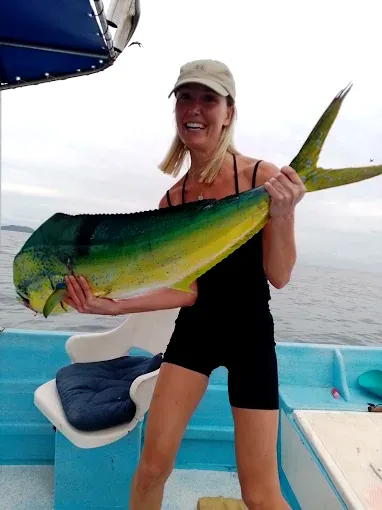
“Captain Pablo knew exactly where to go. We caught dorado and tuna, and he even filleted everything for us.”
“Easy, fun, stress-free. The crew handled the bait, gear, and cleaning — we just reeled and smiled.”
“We booked through Amari and it made everything simple. Departure time, launch point, cooler, drinks — all ready when we arrived.”
🏝️ Stay Close to Sayulita’s Best Fishing
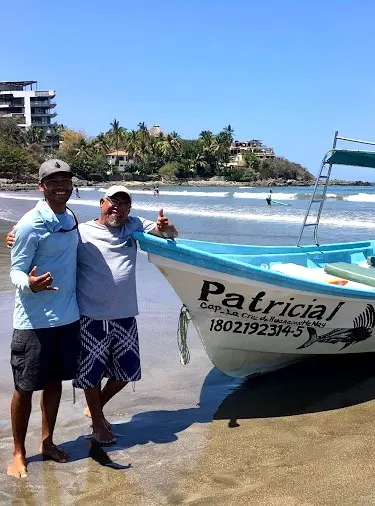
Staying near Sayulita’s launching points makes early departures effortless, especially for sunrise bite windows and tide-dependent conditions. Amari Boutique Hotel sits on the North Side — close to charter pickups, quiet at night, and easy to reach after a long day on the water.
It’s one of the few places where you can wake up, grab your gear, and be on a panga within minutes. Our team coordinates departure time, transport if needed, and post-trip filleting, so your day on the water feels easy from start to finish.
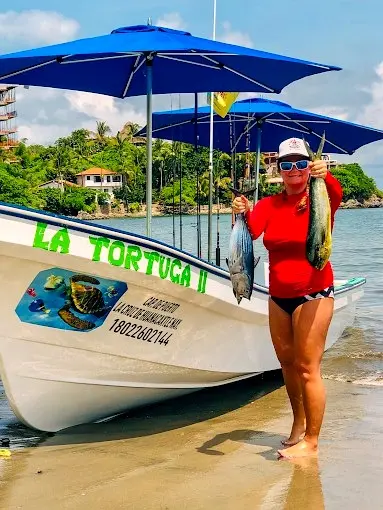
🎣 Ready to Fish?
Book your stay at Amari Boutique Hotel Sayulita and step onto a panga without the early-morning scramble.We coordinate the captain, departure time, launch point, and post-trip filleting — so all you need to do is bring your essentials and enjoy the day.
Whether you’re chasing trophy billfish, surf-casting for Roosterfish, or taking kids on a fun panga trip, our team handles the logistics from start to finish. Fish early, return comfortably, and let us take care of the details.
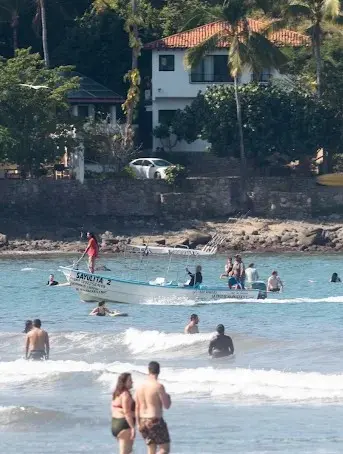
✔️ Searching for a Premier Sayulita Hotel? Many Anglers Choose Us.
Amari offers a serene retreat on Sayulita’s peaceful North Side for travelers seeking adventure and calm. With artisan details, lush surroundings, and a tropical setting, Amari delivers ocean adventures by day and restorative comfort afterward.
🌸 Suites with Artisan Character & Natural Calm
Each suite features handcrafted, locally inspired design. After long offshore runs or hard reef fights, unwind with wellness comforts including our saltwater pool, sauna, and cold plunge — ideal for anglers recovering from the heat and effort of the day.
🌿 Gated Sanctuary with Pure Water & Seamless Connectivity
Inside our gated enclave, guests enjoy meaningful essentials: a pure-water well, dependable fiber and Starlink Wi-Fi, and peaceful surroundings where nature sets the pace. Explore refined amenities and see why anglers return for quiet comfort between outings.
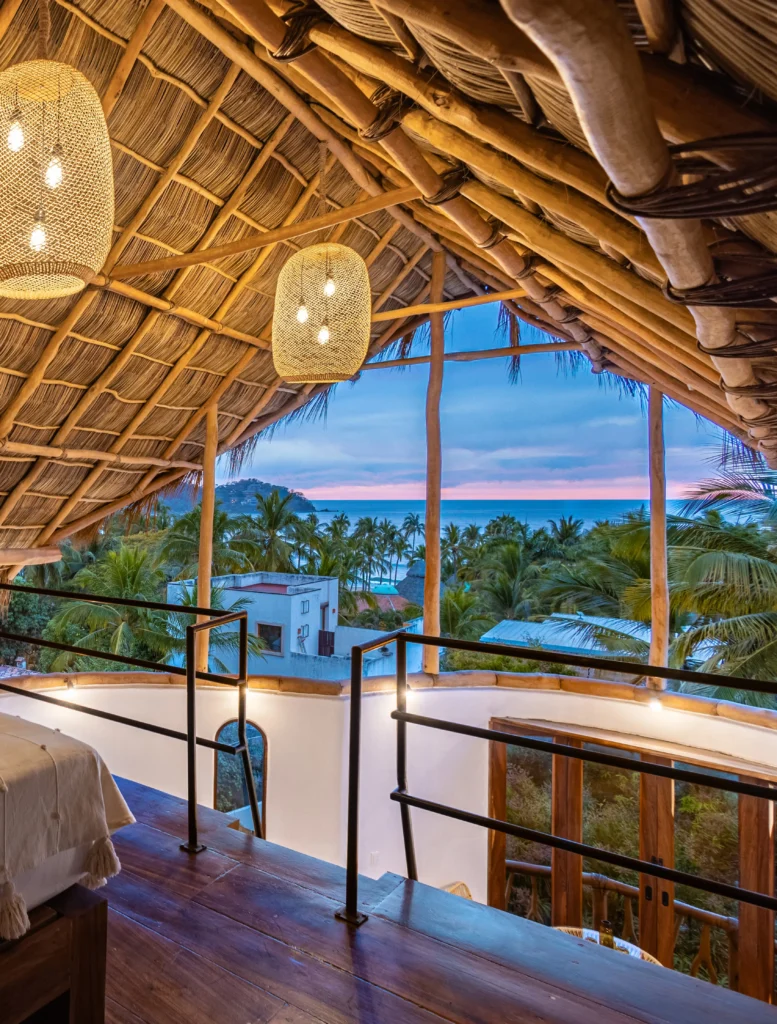
🔎 Explore More Sayulita Travel FAQs
Curious about fishing seasons, tides, wildlife, beaches, or boat tours? Explore our Travel Blog — a helpful local guide for planning your best days in Sayulita.
Then visit our interactive Sayulita Travel FAQ — a searchable page with 140+ local answers. Type any word (tuna, tides, safety, whale, turtles, beaches) and instantly reveal insider advice.
Have questions? Our team is happy to help — just message our Contact Page.
For a full overview of beaches, culture, food, weather, and logistics, explore our Plan Your Trip to Sayulita Guide.